Fast Kp Astrology Chart Api For Saas Products

Fast Kp Astrology Chart Api For Saas Products
When a SaaS product needs to generate astrology charts quickly, the pressure is usually not just about speed. It is also about consistency, repeatability, and giving users a result they can understand without waiting too long. In that setting, KP astrology becomes especially interesting because it is built around a compact, rule-based method that can be translated well into a structured digital workflow. This is why many product teams, developers, and astrology entrepreneurs look at a fast kp astrology chart api for saas products as more than a technical convenience. It can become the core engine behind a charting app, a subscription platform, a consultation dashboard, or a white-label service.
At KP Astro Academy, the practical question is often not whether astrology can be made digital, but how to present chart outputs in a way that still respects the method. If a user enters birth details and expects a chart within seconds, the system must calculate the chart correctly, organize the significations clearly, and return something useful for interpretation. A fast API matters because a delay of even a few seconds can feel slow in a modern app. Yet speed alone is not enough. A chart service must also be reliable enough that repeated requests return the same calculated result every time. In SaaS products, that reliability affects user trust, customer retention, and support workload.
KP astrology is well suited to this kind of product design because it emphasizes defined layers of judgment rather than vague interpretation. The method relies on the sub-lord theory and the idea that the exact results of a house, planet, or event are seen through structured significations. That makes KP easier to map into software logic than a free-form narrative approach. A developer can calculate planetary positions, derive star and sub placements, and then return a formatted chart that supports prediction workflows. The technical challenge is less about creating “an astrology opinion” and more about building an engine that consistently applies the same logic to each chart.
For a SaaS founder, this can open several product directions. One startup may want to offer instant natal charts for customers who sign up through a monthly plan. Another may build a consultation platform where astrologers review charts before sessions. A third may create a B2B tool for partners who need chart generation embedded in their own websites. In all three cases, a fast KP astrology chart API helps reduce friction. Instead of asking users to wait for manual chart preparation, the system can generate the base structure immediately and allow the rest of the product experience to focus on interpretation, education, and guidance.
Why speed matters in an astrology SaaS product
In a SaaS environment, users compare astrology tools to other digital experiences they use every day. If they are used to quick results from payment platforms, booking apps, or AI tools, they expect the same kind of responsiveness from an astrology product. A chart generator that takes too long can create the impression that the system is outdated, even if the calculations are accurate. Speed helps the user stay engaged at the moment of curiosity. That moment matters because people often come to astrology products with a specific question: career, marriage, relocation, children, timing, or a general life review. If the chart appears quickly, the user is more likely to continue exploring.
Consider a common scenario. A user lands on a SaaS app through an ad promising instant KP charts. They enter their date, time, and place of birth on a phone during a short break. If the result loads quickly, they can immediately browse the chart, read a short summary, and perhaps upgrade to a paid plan for deeper analysis. If the system is slow, they may leave before finishing the form. That is why performance is not only a technical metric; it directly affects conversion. In practice, even a polished interface cannot fully compensate for lag.
Fast response also matters for professional users. A consulting astrologer may handle several client sessions in a day. If the tool can generate charts instantly, the astrologer can spend more time interpreting and less time waiting. A white-label SaaS client may want to embed the API inside their own website, and they will expect the same performance even during peak hours. In that sense, the chart engine becomes part of the customer experience, not just a backend service.
How KP astrology supports structured chart generation
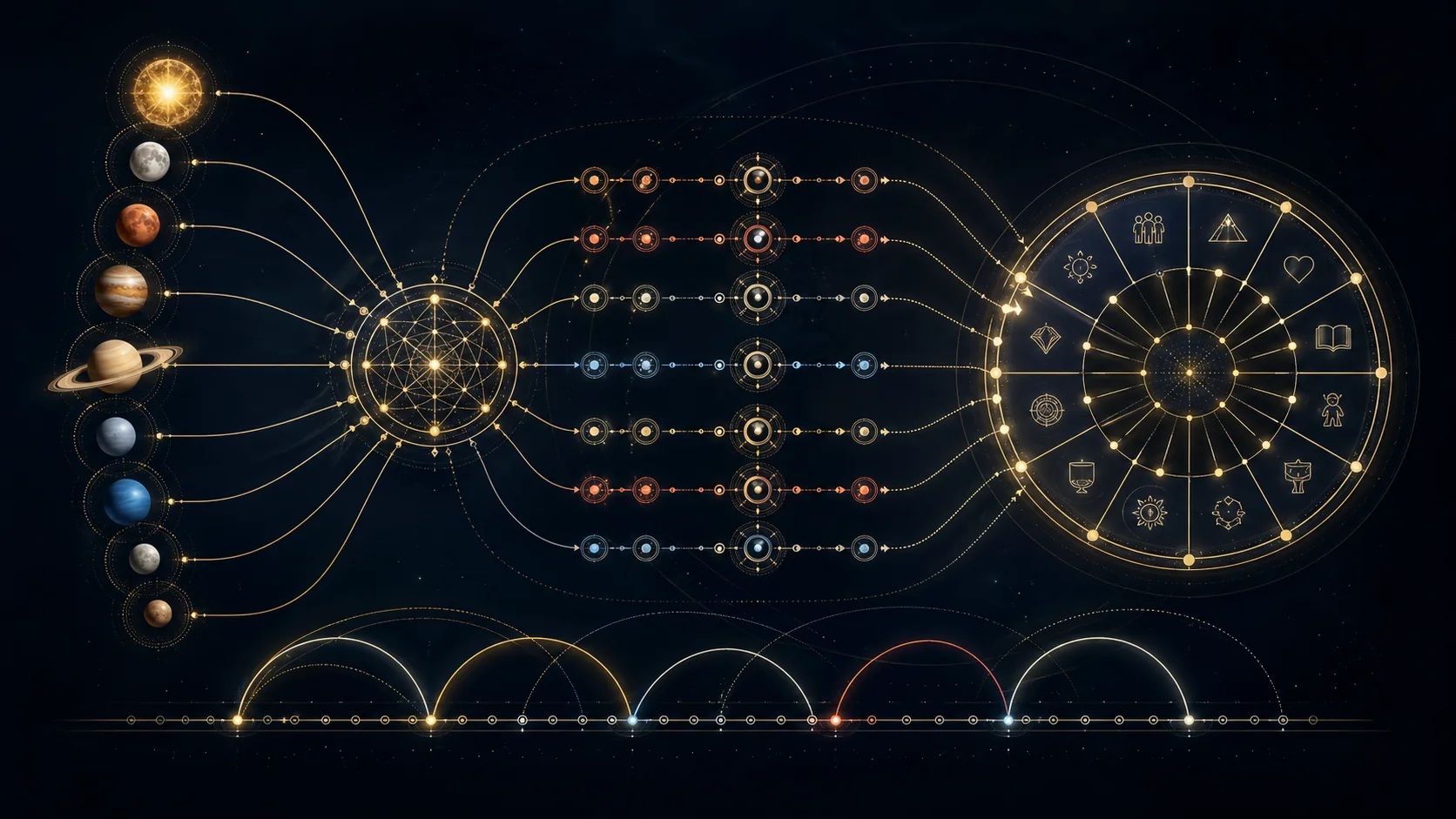
The appeal of KP astrology in software lies in its layered structure. At a high level, the chart can be processed through clear steps: calculate the planetary positions, identify the star lord and sub lord, determine house significations, and then organize the result in a way that can support prediction. This step-by-step structure is easier to automate than methods that depend heavily on free-flowing judgment. For product teams, the clarity of the process can reduce ambiguity in implementation and testing.
One important point is that a chart API should not pretend to interpret beyond what the configured logic supports. A good system may display the planetary data, the star lord and sub lord relationships, and the relevant house significations. It can then allow the user or astrologer to interpret those details. This is a healthier product design than making exaggerated promises. KP astrology itself is about careful analysis, and a software product should reflect that discipline.
Another practical benefit is modularity. A SaaS platform can use the API as one part of a broader ecosystem. For example, the chart service can feed data into a PDF report generator, a dashboard with saved charts, a reminder engine for consultation follow-ups, or a lead capture funnel. Because the logic is rule-based, it can be stored, reused, and displayed across different screens without losing consistency. That consistency is especially important when the same chart is viewed on mobile, desktop, and admin panels.
A realistic product story: from manual charts to instant delivery
Imagine a small astrology business that began with manual consultations. The founder used to receive birth details by message, prepare charts by hand, and send interpretations the next day. The business got solid reviews, but the process created a bottleneck. New customers wanted immediate answers, and the team could not scale without hiring more astrologers. They then decided to build a SaaS product with instant chart generation and a paid interpretation layer on top.
In the early version, customers filled out a form and waited for a chart to be prepared manually in the background. Even though the results were accurate, users sometimes abandoned the process before finishing. After adding a fast chart API, the front end could display the chart in seconds. The system showed the main chart, basic data, and a simple guidance note. Customers could then choose whether to continue to a premium interpretation, book a consultation, or download a report.
This shift changed the business in a practical way. The company no longer depended on one astrologer’s availability to create the first chart. Support tickets about “where is my result” decreased. More importantly, users felt that the product was alive and responsive. They were more likely to trust the platform because they could see the chart instantly. The actual insight still came from interpretation, but the first impression came from speed.
What a fast KP chart API should deliver
For a SaaS product, the API should do more than return raw planetary positions. It should present the information in a format that downstream components can use. That usually means a clear chart structure, consistent house data, and outputs that can be connected to dashboards, reports, or notifications. If the API is well designed, the product team can build different experiences on top of the same calculation engine.
- Fast response time: Users should see a chart quickly enough to stay engaged.
- Stable calculations: Repeated requests should produce consistent outputs for the same birth data.
- Clear data structure: The returned data should be easy for front-end and reporting tools to use.
- Scalable design: The service should handle more users as the SaaS product grows.
- Flexible integration: It should fit websites, mobile apps, dashboards, and white-label products.
For many businesses, the real value comes from how the chart output is reused. A chart can power a user dashboard, a consultation booking page, a premium report, or even a CRM tag that helps segment leads. A user who checks a chart on the app may later receive an email offering a reading focused on career or relationship timing. The API therefore becomes part of a larger user journey, not just a charting utility.
How sub-lord based logic helps product clarity
In KP astrology, the sub-lord plays a crucial role in confirming or denying the results. That matters in software because users often want clarity, not vague possibilities. A product can present the main chart data and then organize it into a readable sequence that helps the user understand which factors support a result and which do not. The point is not to turn the app into an automated fortune teller. The point is to create a system where the logic is structured enough to be explained.
For example, a user may ask about job change timing. The product can display the relevant house connections, the star lord indicators, and the sub-lord confirmation. If the user is working with an astrologer through the platform, the software gives a starting point for the session. If the user is self-guided, the platform can offer educational notes that explain why certain indicators are being highlighted. This improves user confidence and helps reduce confusion.
That clarity is especially helpful in subscription apps. A monthly member may return to the platform several times and compare different life questions. If each chart is displayed with the same structure, the user learns the interface more quickly. Over time, they are not just reading isolated results; they are learning how to navigate the method. This can increase retention because the product becomes easier to use with repetition.
Practical example: a SaaS dashboard for astrologers
Suppose a consulting astrologer runs a small team and wants a dashboard for client management. Each client has a profile, a chart, consultation notes, and follow-up reminders. The team needs the chart to appear instantly so that the receptionist can enter data during booking and the astrologer can open it during the session. A fast KP chart API makes this possible.
When the client arrives, the receptionist enters the birth details. The dashboard generates the chart immediately and stores it. The astrologer opens the same record and sees the chart structure, along with the star and sub-lord details. The conversation then moves quickly from data entry to interpretation. After the session, the system can attach notes, save the key topics discussed, and trigger an email summary. This workflow saves time and reduces the chance of manual errors.
Now imagine the same dashboard without a fast API. The receptionist has to wait, the client gets impatient, and the astrologer begins late. If this happens repeatedly, the team feels disorganized even if the underlying astrology knowledge is strong. In other words, performance affects the perception of professionalism. For SaaS products, that perception often influences subscription renewals and referrals.
Building trust through transparent chart presentation
Many users come to astrology software with a mix of curiosity and skepticism. They may be open-minded, but they still want to know that the product is coherent. Transparent presentation helps. If the app shows the chart, the relevant data, and the basis of interpretation in a clean layout, users can follow the logic more easily. They do not need to agree with every conclusion to appreciate that the system is organized.
That is why many successful astrology products avoid overpromising. Instead of saying every result is absolute, they focus on helping users understand the chart and the method. KP astrology fits this approach well because its structure is explainable. A SaaS app can combine chart display with educational content, short tooltips, and links to deeper learning resources. The user gets both the result and the context.
The same principle applies to the brand. A product that feels thoughtful and consistent will usually inspire more confidence than one that feels flashy but unclear. This matters in astrology because users often return when they feel the platform respects their time and their questions. A fast API is part of that respect, but so is the way the information is shown.
Where the ruling planets calculator fits in
For users who want to go beyond the chart itself, supporting tools can add value. One useful resource is the ruling planets calculator. In a SaaS context, such a tool can serve as a companion feature that helps users and astrologers work with KP-oriented analysis more efficiently. When chart data and supporting calculators are available in the same ecosystem, the user experience becomes more complete.
For example, a visitor may first generate a chart, then open the ruling planets calculator to explore how the current moment aligns with their question. A consultation platform can use that flow to help users prepare before a session. A course platform can use it as a teaching aid. The important thing is that the product ecosystem remains coherent. The chart API provides the core data, and auxiliary tools help translate that data into practical use.
How lead magnets and consultations can fit the funnel
For a SaaS business, the chart API may support both free and paid experiences. A free chart can capture attention, while deeper services generate revenue. This is where content, education, and offers work together. The chart can become the entry point, and a consultation or course can become the next step.
A simple example is a user who generates a free chart and sees a short summary. Right below the chart, they are offered a free resource, such as the top 5 KP Astrology rules cheat sheet. That download can build trust and encourage learning. Later, the same user may decide to book a session or enroll in a course because they now understand the value of structured analysis. In this way, the API supports lead generation, not just technical delivery.
Another scenario involves a product for professional astrologers. The chart API may be included in a subscription plan, while advanced consulting features are sold separately. The SaaS business benefits because the chart service brings users into the platform, and the educational or consulting layer helps monetize the relationship. This model works best when the chart output is quick, clean, and easy to build upon.
Common implementation mistakes to avoid
Even a strong astrology engine can underperform if the product design is weak. One mistake is hiding important chart information behind too many clicks. Users want immediate clarity. If they have to search for basic details, the app can feel cumbersome. Another mistake is making the chart visually attractive but technically hard to use. A good interface should support reading, not distract from it.
Another issue is inconsistent data formatting. If one chart appears with a different structure from another, users may think something is wrong. This is especially harmful in a service where trust matters. The same birth details should lead to the same output format every time, and the labels should remain stable across the platform.
It is also important not to overstate what the software can do. The API can generate the chart and provide the structured data, but interpretation still requires judgment. A product that frames the output responsibly is more credible than one that claims certainty about every life event. KP astrology is serious work, and the software should reflect that seriousness.
How this topic connects to practical learning
Many people exploring astrology software are not only product builders. Some are students, consultants, or researchers trying to understand how KP logic can be presented in a modern format. For them, the value of a fast chart API is educational as well as commercial. It lets them test the same chart repeatedly, compare results, and see how the structure changes with different birth details. That repetition can support learning.
For instance, a student might generate charts for family members, note the star and sub-lord relationships, and compare them with actual life events. A consultant may use the system during practice sessions to sharpen speed and consistency. A founder may study the outputs to see whether their product can support more advanced features later. In all these cases, the API is not just a backend service. It is also a learning environment.
That is one reason KP Astro Academy emphasizes practical explanation. People understand astrology better when they can see the logic at work in real scenarios. Fast digital charting helps make that possible because it reduces the time between question and observation. The user can ask, check, compare, and learn without waiting long for the chart to appear.
Closing perspective
For SaaS products, a fast KP astrology chart API is valuable because it combines speed, structure, and scalability. It helps users receive instant charts, supports astrologers who need efficiency, and gives product teams a solid base for building dashboards, reports, and consultation workflows. KP astrology is especially suitable for this kind of product because its rule-based format can be translated into a clear digital process.
The key is to treat the chart engine as part of a broader user journey. Speed brings the user in, but clarity keeps them engaged. Structured interpretation builds confidence, and supporting tools help expand the experience. When a product uses KP logic carefully and presents the information responsibly, it can serve both educational and commercial goals. That balance is what makes this topic important for modern astrology SaaS products.
Whether you are building a client portal, a membership platform, or a white-label charting service, the practical lesson is the same: a fast chart is only the beginning. The real value comes from how well the software organizes the KP data, how clearly it supports interpretation, and how smoothly it fits into the user’s next step. That is where astrology knowledge and product design meet.
Explore More from KP Astro Academy
Related Tools & Features
- Childbirth Selection Tool
- Birth Time Rectification Tool
- Ruling Planets Calculator
- Marriage Matchmaking Calculator
- Career & Education Finder
- Transit Search & Prediction
- Planetary Remedies Finder
- Free KP Kundli
- Daily Panchang Calculator
- Vedic Ephemeris Calculator
- Hora Chart Calculator
- Ashtak Varga Calculator
- KP Event Finder
- Personal Muhurat Finder
- Cusp Promise Calculator
- Bhav & Dasa Phal Predictions
- Dasha Promise Calculator
- KP Astrology Consultation
Further Reading
- Childbirth in KP Astrology: Promise, Delay, Denial, and Hope
- Education, Skill, and Why Your Degree May Not Become Your Career in KP Astrology
- Dasha Timing Api For Indian Astrology Apps
- How to Rectify Birth Time Using KP Astrology: A Step-by-Step Guide
- Cusp Promise Api For Advanced Astrologers
- Education and Professional Success: The Role of 4th and 10th Houses in KP Astrology
- What to Expect in a Professional KP Astrology Reading
- Live Ruling Planets vs Birth Chart Ruling Planets: A KP Astrologer's Guide
- Ashtakvarga System: Measuring Planetary Strength in Your Kundli
- Career Business Astrology Report Api
- Safe Gemstone Recommendations For Consultants
- From Chaos to Calm: The Immediate and Long-Term Benefits of Daily Meditation
Loading article...