Safe Gemstone Recommendations For Consultants

Safe Gemstone Recommendations For Consultants
Welcome to KP Astro Academy. In this article, we explore the deep insights of Krishnamurti Padhdhati (KP) astrology regarding safe gemstone recommendations for consultants.
For many people, the word “gemstone” immediately brings hope: hope for a better job, smoother relationships, improved finances, or relief from recurring obstacles. In consultations, gemstones are often one of the first remedies people ask about because they are simple to wear, easy to understand, and widely discussed. Yet that simplicity can also create confusion. A consultant may ask, “Which stone should I wear?” but the real question is often, “Will this remedy support my actual chart promise, and will it do so safely?” KP astrology addresses that question with a structured, event-based approach rather than a generalized belief that one stone suits everyone.
In KP practice, “safe” does not mean a gemstone is magical, guaranteed, or universally beneficial. It means the recommendation is made with careful attention to whether the planet being strengthened actually supports the matter the consultant wants to improve. If a planet is connected to the desired result and not clearly harmful for the relevant area, then strengthening it may be sensible. If a planet signifies opposite outcomes, strengthening it can backfire or produce results in a different direction than expected. This is why the same gemstone can be helpful for one person and unhelpful for another, even when both ask the same question with genuine sincerity.
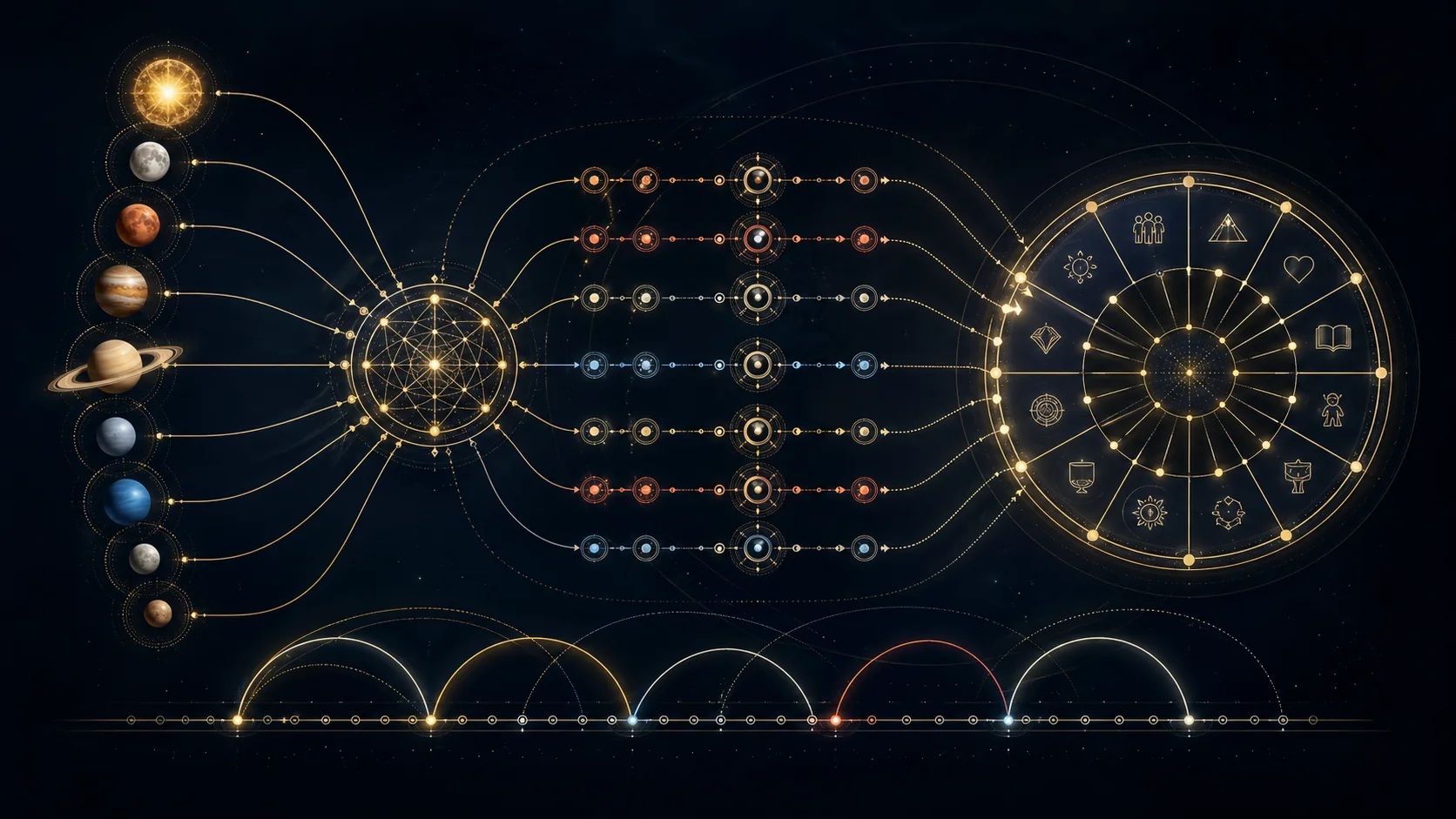
KP astrology provides a highly accurate, rule-based approach to predictions using the sub-lord theory and ruling planets. By evaluating the stellar and sub-level significations, we can precisely time events related to this topic. That timing element matters because a consultant may ask for a gemstone during a period when the planet is promising, while at another time the same planet may be weakly placed in a way that does not support the desired outcome. In practical consultation work, the astrologer is not merely checking whether a planet is strong or weak in a conventional sense. The actual task is to see whether the planet signifies the houses connected with the matter, whether it supports the sub-lord promise, and whether the recommendation remains aligned with the chart’s broader pattern.
Consider a realistic consultation example. A person comes in worried about repeated delays in interviews. They may say, “I heard yellow sapphire is for Jupiter, so should I wear it?” In a non-KP discussion, the answer may be based mainly on Jupiter’s general reputation. In KP, the answer is more measured. The astrologer first examines the matter of profession, opportunities, recognition, and movement into service. Then the relevant houses, significators, and sub-lords are checked. If Jupiter truly supports the houses tied to the person’s employment prospects and does not primarily carry significations of delay, loss, or denial for that topic, a yellow sapphire may be considered. But if Jupiter is more connected to confusion, overexpansion, or a matter irrelevant to that person’s career promise, wearing the gemstone just because it is famous would be a poor recommendation.
This is the heart of safe gemstone guidance: not enthusiasm, but judgment. Not “Which planet is powerful?” but “Which planet supports the event, and in what way?” KP astrology reduces guesswork by focusing on what the chart actually says. That makes gemstone advice more responsible, especially for consultants who want practical guidance instead of a one-size-fits-all remedy.
Key Principles
- Stellar Level: The star lord indicates the results.
- Sub Level: The sub lord confirms or denies the results.
These two principles are simple to state, but they carry significant weight in consultation practice. A planet may appear promising at one level and disappointing at another. For gemstone advice, that means the visible surface of the chart is not enough. A person might have a planet occupying a supportive constellation, yet its sub-lord may deny the desired matter. In that case, strengthening the planet without reading the sub-level can be risky. The reverse is also true: a planet may not look impressive in broad terms, but its sub-lord can still support the outcome in a very specific matter. Safe recommendation depends on that deeper check.
Imagine a consultant asking about marriage. They may already know that Venus is the natural significator of relationships, so they assume a Venus gemstone will help. In KP, the question is not handled that simply. The astrologer checks whether Venus is actually supporting the houses of marriage in that chart and whether the sub-lords of relevant cusps indicate acceptance, union, and settlement. If Venus is tied to separation, hidden tension, or unfinished commitments in the chart context, a stone meant to strengthen it may intensify the wrong theme. If Venus truly supports partnership and the sub-lords agree, then the recommendation can be far more confident. The safe part is not the gemstone itself; it is the matching of remedy to promise.
Another practical point is that consultants often arrive with a specific expectation. Someone may want “the strongest possible stone” because they are impatient or afraid of missing an opportunity. But stronger is not always better. In astrology, especially when one is working with remedial suggestions, the goal is not to maximize a planet blindly. The goal is to improve the matter the consultant is concerned about without activating contradictory significations. A gemstone should be recommended only when the relevant planet is clearly part of the supportive chain for the event. That approach protects both the integrity of the consultation and the client’s trust.
Safety also means recognizing that a gemstone is a support, not a substitute for proper chart reading. A client may imagine that if the right stone is worn, everything else becomes irrelevant. In practice, the gemstone works only as part of a larger understanding of the chart. It does not override the need to examine timing, transit support, house significations, and the specific question raised by the consultant. This is especially true for recurring concerns such as delayed employment, repeated relationship disappointment, or uncertain financial periods. A thoughtful recommendation should reflect the whole pattern rather than one isolated indicator.
It is also important to distinguish between a general wellness discussion and a specific event-oriented consultation. A person may come for broad guidance and ask what gemstone is “best” for them in life. Another person may ask whether they should wear a stone for a marriage proposal expected within the next few months. In the first case, the astrologer may focus on overall chart support and long-term themes. In the second, the recommendation must be much more exact because the question is tied to a near-term event. KP’s strength lies in that specificity. The more precise the question, the more precise and safer the remedy discussion can be.
One consultant’s story illustrates this well. A business owner once came asking for a ruby because a friend had told him it would improve leadership and recognition. However, the actual concern was not general confidence. He wanted to know whether a partnership proposal should be accepted within a short window. In the reading, the chart suggested that the matters of collaboration, obligation, and financial sharing were more relevant than personal authority. A ruby would have strengthened a different theme altogether. The safer path was to avoid a reflexive gemstone recommendation and instead understand which planets were actually connected to the proposal. The client later appreciated that the answer was grounded in the question rather than in generic gemstone lore.
Safe gemstone recommendation therefore begins with disciplined analysis. The astrologer asks: what is the exact matter, which houses govern it, which planets signify those houses, and whether the sub-lords confirm the promise. Only after that is a gemstone even considered. If the answer is uncertain, no gemstone is better than a doubtful one. That is a difficult standard for some clients to hear, because they want a clear action item. But honesty is part of safety. A remedy that appears attractive but lacks chart support is not helpful merely because it is popular.
To make this practical, it helps to think of gemstone advice in stages. First, identify the topic: career, marriage, health-related concerns in a general astrological sense, property, education, or travel. Second, determine the relevant house connections. Third, examine the star and sub-level significations of the planets involved. Fourth, see whether the overall timing supports the matter. Fifth, only then decide whether strengthening a planet is appropriate. A safe recommendation follows those stages rather than jumping directly to a stone based on tradition or habit.
For example, if someone asks about education, the astrologer does not simply look at Mercury and say, “Wear an emerald.” The reading should ask whether Mercury signifies the houses relevant to education in that chart, whether Jupiter or the Moon has any supportive role, and whether the sub-lords indicate success, continuity, and comprehension. If Mercury signifies distractions, restlessness, or misdirected effort in that chart, an emerald may not be the safest option. If, on the other hand, Mercury genuinely supports study, learning, and exam-related promise, then the suggestion becomes more grounded. Safe recommendation is chart-specific, not brand-specific.
There is also a very human side to this topic. Clients often seek a gemstone at moments of uncertainty. They may have just experienced a rejection, a breakup, a missed chance, or a financial setback. In such moments, a gemstone can feel like a tangible form of hope. An astrologer must respect that feeling while still offering careful guidance. If the chart does not support a gemstone recommendation, the astrologer should not use the client’s vulnerability as an opportunity to sell certainty. Instead, the consultation should clarify what the chart supports and what it does not. That restraint is part of professional responsibility.
In everyday consultation practice, safe recommendations also benefit from context. A person’s age, current life stage, and immediate objective matter. A young job seeker and a senior professional may both ask about career, but the timing and chart emphasis can differ significantly. Likewise, two people asking about marriage may be in completely different stages: one waiting for a suitable match, another dealing with delay after engagement. The gemstone recommendation, if any, must fit the specific situation. KP’s event-oriented method is well suited to that kind of nuance because it does not assume that every person under the same topic shares the same remedy.
A useful way to explain this to clients is to say that a gemstone is not chosen because a planet is famous; it is chosen because the planet is functionally supportive for the matter at hand. That sentence alone can prevent many misunderstandings. It tells the client that the astrologer is not following generic horoscope culture. It also helps the consultant understand why a widely recommended stone may be withheld in their case. Sometimes the safest answer is to recommend no gemstone and instead advise patience, a better timing window, or a fresh consultation when the question becomes more concrete.
Another realistic scenario involves parents asking about a child’s studies. They may want a remedy quickly because exams are near. However, a school-related issue can involve attention, performance pressure, memory, confidence, or inconsistent routine. If the chart shows that the relevant planets do support learning but timing is not yet ideal, a gemstone might be considered. If the chart indicates that distraction or resistance is the dominant theme, a gemstone alone may not be enough and may not be the safest first step. The astrologer should explain that a stone can only reinforce a promise already present; it should not be used to force an outcome the chart does not support.
That principle matters in financial consultations too. A consultant may ask for a gemstone to “attract money.” In practice, money-related questions may concern salary, savings, business expansion, debt management, or unexpected outflow. Strengthening a planet without checking whether it signifies the right form of financial growth can lead to disappointing results. A planet that supports income may not necessarily support savings. A planet that helps business activity may not help settlement of debt. Safe gemstone advice requires that level of precision because “money” is not one single event in the chart.
For clients who are new to KP, the idea of ruling planets can also be helpful in the consultation process. Ruling planets provide a practical way to stay anchored in the present moment and align the question with the chart reading. When a question is asked at the right time and the ruling planets echo the chart promise, the astrologer can feel more confident about the direction of the recommendation. This does not replace chart analysis, but it can add a useful layer of confirmation. In a safe gemstone discussion, that confirmation is valuable because it encourages caution rather than haste.
Not every consultation ends with a gemstone. That is perfectly acceptable. Sometimes the most responsible outcome is a clear explanation, a timing suggestion, or a recommendation to observe the situation further. In a world where people often expect immediate fixes, this can be refreshing. A safe KP approach does not force remedies to fit every problem. It recognizes that some questions need observation, some need timing, and some may simply not warrant a gemstone at all. The discipline to say “not now” is as important as the ability to say “yes.”
Here is another practical example. A client asks whether to wear a stone before an important interview next week. The astrologer reviews the chart and sees that the concern is not only about confidence but also about how the person is likely to be perceived by authority figures. If the relevant significations are mixed, recommending a gemstone may feel tempting, but the safer decision may be to avoid it unless there is a clear chart-based reason. Instead, the astrologer may explain that the interview period itself is the key focus and that the chart should be read for the precise chance of success. The client leaves with a more realistic understanding and avoids a remedy that could work against the desired result.
Safe gemstone recommendations also protect the reputation of the consultation practice. If clients repeatedly receive generic stone advice and do not see meaningful alignment with their outcomes, they may lose confidence in astrology itself. A careful, chart-based approach does the opposite. It shows that astrology is being used thoughtfully and not as superstition. This matters for anyone who works with clients regularly, whether in one-on-one consultations or in educational settings. The quality of the remedy is part of the quality of the reading.
At times, consultants may ask whether a gemstone can be worn “just in case.” That question should be handled cautiously. In KP, just-in-case remedies are not ideal when they lack evidence from the chart. A safe recommendation must be answerable in terms of significance and promise. If the relevant planet does not clearly support the matter, wearing its gemstone as a precaution may do little or may even create confusion in results. The more precise the consultation, the better the chance of giving a recommendation that truly fits.
Another point worth remembering is that the client’s belief and compliance matter. A gemstone that is recommended with confidence but worn irregularly, or worn with doubt, does not create a clean consultation experience. While astrology is not reduced to psychology, the human side of remedy use matters. A client who does not understand why a stone was recommended may not use it consistently. This is another reason to explain the reasoning in simple terms: what matter is being supported, which planet is involved, and why strengthening it is considered safe. Clear explanation helps the client participate more responsibly in the remedy process.
KP astrology is especially useful because it gives structure to these decisions. Rather than relying on vague impressions, the astrologer checks the chain of significations. The star lord indicates the background result, and the sub lord refines or denies it. When that chain supports the topic, a gemstone may become a helpful tool. When it does not, restraint is wiser. This framework is what makes safe gemstone recommendation more than a matter of tradition; it becomes a disciplined part of consultation practice.
For learners and practitioners, the best habit is to keep asking, “What is the chart promising here?” before asking, “What stone should I recommend?” That shift in order changes the entire consultation. It moves the focus from remedy-first thinking to analysis-first thinking. It also makes the client experience better, because the answer feels earned rather than automatic. In a profession where trust matters, that difference is significant.
If you are studying these ideas through the lens of KP Astro Academy, the main takeaway is simple: gemstones should be recommended only when the chart specifically supports them for the matter in question. The method is selective on purpose. It avoids overstatement, respects the sub-lord principle, and keeps the advice aligned with actual chart promise. That is what makes a recommendation safe in the KP sense.
There are many situations where a well-intentioned but careless gemstone suggestion can miss the mark. A parent may buy a stone for a child based on a friend’s recommendation. A job seeker may wear a gemstone because a popular article promised fast results. A couple may choose stones for relationship harmony without checking whether the chart even supports that area in the intended way. Each of these examples highlights the same lesson: the gemstone should follow the chart, not the chart follow the gemstone.
When done correctly, though, gemstone guidance can be reassuring and practical. It gives the consultant something concrete to consider without pretending that the remedy exists independently of the chart. It creates a disciplined bridge between prediction and action. And because KP astrology emphasizes exactness, it encourages the astrologer to be cautious where necessary and decisive where justified.
In summary, safe gemstone recommendations for consultants are built on three foundations: clear questioning, careful chart analysis, and honest judgment. The right gemstone is not the one with the best reputation; it is the one that matches the chart’s promise for the specific matter being discussed. That is the KP approach, and it is the reason gemstone recommendations can be both useful and responsible when handled correctly.
Stay tuned for a detailed breakdown and case studies on this specific topic.
Related Course Videos
Need personalized guidance?
Book a 1-on-1 Consultation to get specific answers based on your birth chart.
Book ConsultationExplore More from KP Astro Academy
Related Tools & Features
- Childbirth Selection Tool
- Birth Time Rectification Tool
- Ruling Planets Calculator
- Marriage Matchmaking Calculator
- Career & Education Finder
- Transit Search & Prediction
- Planetary Remedies Finder
- Free KP Kundli
- Daily Panchang Calculator
- Vedic Ephemeris Calculator
- Hora Chart Calculator
- Ashtak Varga Calculator
- KP Event Finder
- Personal Muhurat Finder
- Cusp Promise Calculator
- Bhav & Dasa Phal Predictions
- Dasha Promise Calculator
- KP Astrology Consultation
Further Reading
- Childbirth in KP Astrology: Promise, Delay, Denial, and Hope
- Mastering the Dasha Sequence in KP Astrology
- KP Astrology Foundations (Part 3): How to Read a KP Script Without Guesswork
- Marriage Compatibility Report Api For Astrology Sites
- Understanding KP Hit Theory the Right Way
- Birth Time Confidence Scoring For Kp Reports
- Astrology Isn’t Meant to Comfort You
- Free KP Kundli (Birth Chart) Generator: Understanding Your Horoscope
- How to Check Marriage Compatibility Using KP Sub-Lord Method
- Behavioral Remedies Api For Astrology Products
- Why You Attract the Same Relationship Problem Again and Again
- Multilingual Astrology Report Generation Platform
Loading article...