Dasha Transit Api For Prediction Platforms

Dasha Transit Api For Prediction Platforms
Welcome to KP Astro Academy. This article explores how a dasha transit API can be structured and used inside prediction platforms, while staying aligned with the practical logic of Krishnamurti Padhdhati (KP) astrology. The goal is not just to display astrology data on a screen, but to organize it in a way that helps users understand timing, context, and the likely direction of events more clearly.
Many modern astrology apps focus on convenience: a user enters a birth time, clicks a button, and receives a prediction. That may be useful, but prediction platforms become much more meaningful when they also explain why a result is being shown. In KP astrology, timing is not based on guesswork. It depends on a careful reading of the chart, especially the interaction between dasha, transit, the stellar level, the sub level, and supporting factors such as ruling planets.
For a platform builder, this creates an important design challenge. A chart engine may calculate planets accurately, but the output still needs to be presented in a way that is understandable, practical, and respectful of how astrological judgment is made. A good API can help by organizing the core data, passing it to the prediction engine, and making it easier for the platform to generate consistent interpretations. When done well, the platform becomes more than a lookup tool. It becomes a guided decision-support system for astrologers, students, and serious users.
In real usage, people rarely ask a single abstract question like “What does the chart say?” They ask things like, “When will my job change?”, “Is this the right time to start a new business?”, “Will my family situation improve this year?”, or “Should I wait before making a major move?” A dasha transit API can help organize the timing indicators behind such questions, making it possible for the platform to highlight periods that deserve attention. The key is to keep the output grounded in chart logic rather than oversimplified promises.
Why Prediction Platforms Need Structured Dasha Transit Data
Prediction platforms often struggle with one common issue: they have a large amount of astrological data, but not enough structure to turn that data into a reliable interpretation flow. For example, a user may see planetary positions, current dasha, transit overview, and house significations all on one page, but without a coherent method for combining them. This can leave the user with information, but not insight.
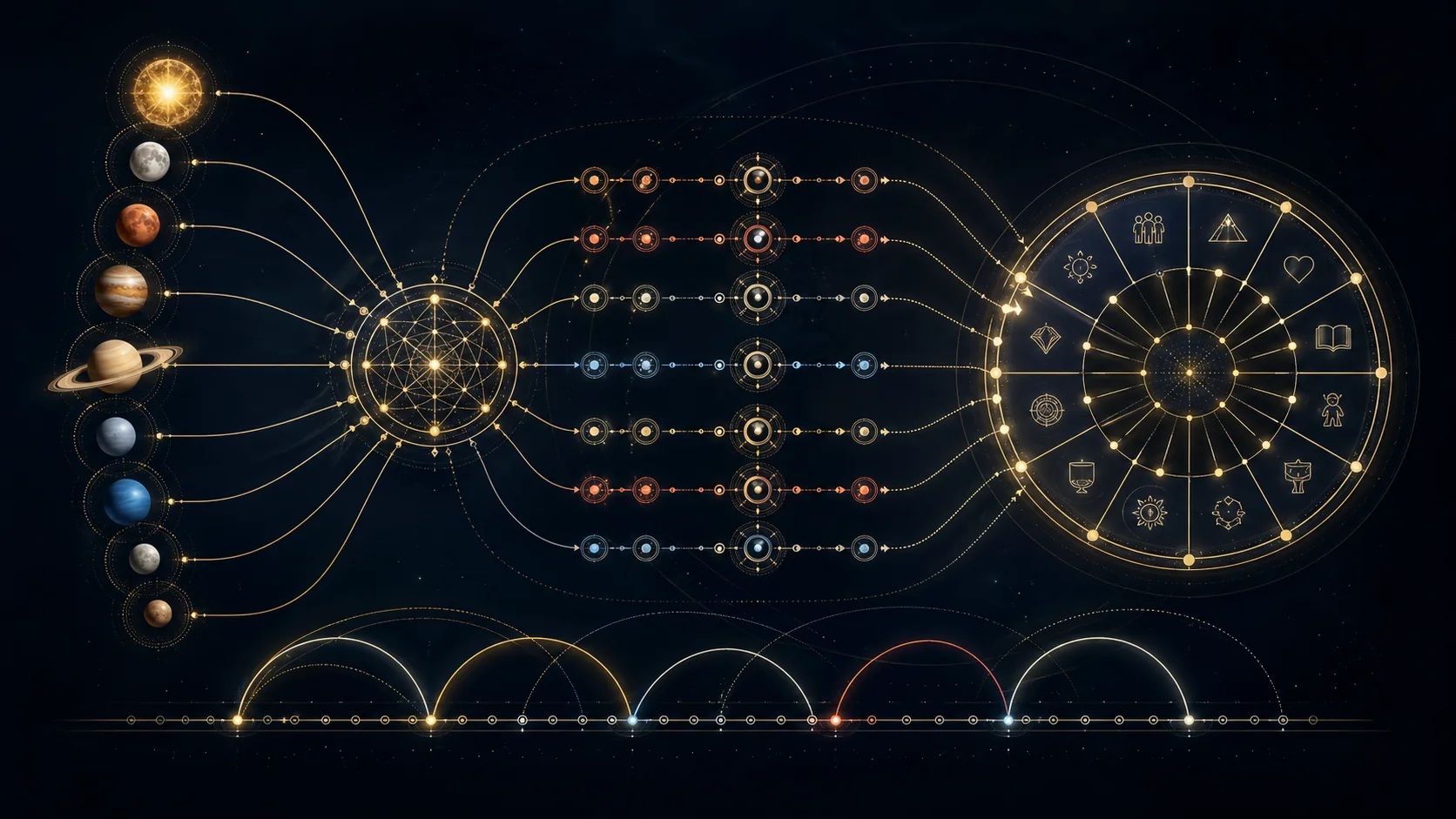
A structured dasha transit API solves part of this problem. It can return the current dasha sequence, sub periods if applicable, transit positions, and reference points needed for analysis. Once the platform receives that data, it can present the timing picture in stages: first the running period, then the transit support, and finally the contextual explanation from the chart factors. This layered presentation is more useful than simply displaying a long list of planetary values.
Consider a simple example. A user wants to know whether a career shift is likely in the near future. The platform may detect a relevant dasha period that connects to work-related significations, and a transit that activates the same theme. If the API presents these factors clearly, the platform can explain that the current period deserves attention. If the periods do not support the event, the platform can just as clearly note that the timing is not yet strong. The value is in consistency and clarity.
Another reason structured data matters is user trust. Astrology users quickly notice when a system gives vague or contradictory answers. If one screen suggests a promotion is likely while another shows conflicting timing, confidence drops. A well-designed API can standardize how the app gathers and uses astrological inputs so that predictions are based on the same logical sequence every time. This is especially important for platforms that serve multiple astrologers or multiple languages.
How KP Astrology Supports Timing Interpretation
KP astrology is especially useful for timing because it emphasizes a rule-based approach. Instead of relying only on broad sign-based generalizations, KP works through the sub-lord theory and the significance chain formed by planets, houses, and cusps. In practical terms, this means that the outcome of a period is judged by how the relevant significators behave and whether the running periods support the event.
At the most basic level, the stellar level indicates the results, while the sub level confirms or denies them. This is a very important principle for any prediction platform to communicate correctly. A platform should not treat every favorable-looking factor as a final answer. Instead, it should separate the indication from the confirmation. That distinction is what keeps the interpretation disciplined.
For example, imagine a user asking about marriage timing. The platform may identify a dasha period connected to relationship significations. However, if the sub level does not support the event, the prediction should be more cautious. Similarly, a transit may activate the relevant area temporarily, but without stronger dasha support, the event may not materialize during that window. This is the kind of layered reasoning that KP users expect.
When building software around this logic, it is useful to think in terms of decision stages. First, identify whether the dasha period carries the relevant promise. Second, check whether transit is activating the same area. Third, review ruling planets and the chart context to see whether the timing is reinforced. A prediction platform that follows this sequence can offer clearer and more explainable results.
There is also an educational benefit. Many users come to astrology platforms with curiosity, but little technical understanding. If the API-driven platform explains that the star lord indicates the general direction while the sub lord confirms the final outcome, users begin to understand why predictions are sometimes positive, sometimes delayed, and sometimes denied. That understanding improves the quality of the entire experience.
Core Elements a Dasha Transit API Should Provide
A practical dasha transit API should not try to do everything at once. Instead, it should return the essential items a prediction platform needs in a clean, predictable format. This usually includes the running dasha period, current sub period if relevant, transit positions, date ranges, and any chart points required for the platform’s interpretation layer.
One helpful approach is to divide the response into sections. The first section can present the birth-based timing factors, such as the current dasha and sub period. The second section can present transit data by planet and date. The third section can provide derived indicators or flags that the platform can use to build readable predictions. When data arrives in this form, both developers and astrologers can work more easily with it.
In a live platform, this might look like a dashboard where the user opens a “Timing” tab and sees the current period, the next period, and a short summary such as “supportive,” “mixed,” or “cautious.” The platform can then expand the reasoning below that summary. For example, it may note that the present dasha supports the topic under question, while transit is only briefly activating it. This type of presentation is especially helpful for users who need quick answers but still want a meaningful explanation.
Another important feature is consistency in date handling. A prediction platform may serve users in different time zones, and dasha or transit windows should be displayed accurately according to the selected location and system settings. If the API and frontend are not synchronized, the user may see a timing shift that creates confusion. Because timing is the heart of this kind of astrology, accuracy in dates and boundaries is essential.
For teams building a commercial product, documentation matters as much as the data itself. Developers need to know what each field means, how to interpret missing values, and how often the data should be refreshed. Astrologers need to know whether the output is intended as a raw input layer or a final interpretive layer. A good API supports both sides by being technically stable and astrologically transparent.
Using Ruling Planets Alongside Dasha and Transit
In KP astrology, ruling planets are often used as an additional practical aid for judgment. When the platform includes a reference to ruling planets, it gives the user one more layer of real-time context. This is not about replacing the chart; it is about helping the astrologer or user see whether the immediate moment supports the same conclusion indicated by the chart factors.
For a prediction platform, this can be especially helpful during consultations. Suppose a user is asking whether today is a good time to initiate a conversation, send an application, or make a decision. The platform can show the current dasha and transit background and also allow the user to check the ruling planets for the moment of the question. That makes the platform more interactive and more aligned with practical KP usage.
Here is a realistic example. A consultation begins with a career question. The chart indicates a period connected to professional matters, but the user wants to know whether to act now or wait. The astrologer checks the running period, transit support, and ruling planets at the time of the consultation. If the indicators point in the same direction, the advice becomes more confident. If they do not align, the astrologer can recommend caution or a later time.
That kind of workflow can be built into an API-driven system. The platform can fetch current ruling planets, compare them with the relevant timing indicators, and show a simple note such as “moment supports review” or “moment supports delay.” The point is not to automate judgment blindly. The point is to support the human interpreter with reliable, well-organized data.
For users, this makes the platform feel more alive. Instead of merely reading a static forecast, they can see how the timing is being assessed in the current moment. For astrologers, it offers a repeatable method that can be used across many consultations. For developers, it creates a clean data model that can be extended without losing clarity.
How Prediction Platforms Can Explain Timing Without Overpromising
One of the biggest risks in astrology software is overstatement. When a platform uses confident language too early, users may assume that a result is guaranteed. But in a disciplined system, prediction is about probability, timing, and confirmation—not certainty. This is especially important when dealing with dasha transit logic, where the same factor may point to a theme without fully producing the event.
A thoughtful platform should therefore use balanced language. For example, instead of saying “You will definitely change jobs this month,” it may say “This period appears more active for career decisions, and transit support suggests the topic is gaining momentum.” That wording is more realistic and more consistent with how seasoned astrologers actually talk. It leaves room for chart context, personal choice, and timing refinements.
Another useful practice is to separate the meaning of a period from the meaning of a date window. A dasha may create the larger opportunity, while a transit may open a smaller window within that period. A user who understands this will not expect every day in a year to behave the same way. The API can support this by showing both the larger span and the narrower active dates.
Here is a practical story that reflects how this can work. A small business owner uses an astrology platform to decide when to launch a new service. The dasha appears supportive for expansion, but the transit window is stronger only for a short upcoming interval. The platform highlights that the period is favorable overall, but the immediate launch date should be chosen within the stronger transit range. The user waits a few days, launches during the more supportive window, and later feels that the timing matched the planning well. Whether one views this spiritually or practically, the platform has helped turn abstract timing into usable guidance.
This is where prediction platforms become genuinely helpful. They are not merely publishing astrology content; they are turning timing logic into a decision workflow. When users feel that the platform is careful and balanced, they are more likely to return and more likely to trust the system over time.
Practical User Journeys for a Dasha Transit API
Different users interact with a prediction platform in different ways, and a good API should support all of them. Some users want fast self-service answers. Others want a deeper chart reading. Some are students trying to learn the method. Others are professionals using the platform during consultations. The same dasha transit engine can serve each group if the product design is thoughtful.
For self-service users, the platform can begin with a simple summary card. It might show the current dasha, the most relevant transit influence, and a brief timing note. If the user wants more detail, they can expand the explanation to see how the conclusion was formed. This keeps the first impression clean while still offering depth for those who want it.
For astrologers, the API can provide a more technical view. They may want the exact period boundaries, the relevant signification list, or a comparison between the running period and transit triggers. In a professional setting, the ability to export or review these details quickly can save a great deal of time. It also reduces the risk of manual calculation errors.
For students, the platform becomes a teaching tool. If the system displays why a result is supported or denied, students can begin to understand how timing logic works in practice. They can compare different charts, observe how the dasha and transit interplay changes, and learn how the sub-level judgment affects the final conclusion. Over time, this is often more valuable than memorizing isolated rules.
Imagine a student who is studying the question of travel. They open the platform and see that one chart has a timing pattern that supports movement, while another chart has similar dasha but weaker confirmation at the sub level. With explanation, the student learns that a broad indication alone is not enough. This kind of learning is exactly what a well-built prediction platform should encourage.
Where the API Fits in a Complete Astrology Workflow
A dasha transit API usually works best as part of a larger astrology workflow rather than as a standalone feature. The platform may first collect birth details, then generate the chart, then calculate dasha and transit, and finally pass the results into a prediction layer. That sequence keeps the technical side organized and helps the user experience feel smooth.
In a consultation context, the API can also support note-taking and follow-up. An astrologer may review the current timing, make a note about the active themes, and then revisit the same data in a future session. Because the platform stores and retrieves the same structured information, it becomes easier to track how a prediction was formed and how the chart context was interpreted at the time.
Some platforms may also combine the timing data with educational content. For example, a user reading about dasha transit could be guided toward a calculator, a consultation booking option, or a short video lesson. This creates a natural pathway from learning to action. It is especially useful for users who want to understand not only what is being shown, but also how to use the method responsibly.
That last point matters. Astrology software is most valuable when it supports informed interpretation. If the platform has a strong API but weak explanation, users may still misunderstand the output. If the platform combines reliable data with clear guidance, the result is much stronger. The user sees both the calculation and the context.
Building Trust Through Accuracy, Clarity, and Relevance
Trust is central to any prediction platform. Users return when they feel the platform is stable, understandable, and relevant to their questions. In KP astrology, trust is built by showing that the system respects the difference between indication and confirmation, and by keeping the interpretation consistent with the chart logic.
Accuracy begins with the underlying data. Birth details must be entered correctly, time zones must be handled carefully, and transit data must be current. Clarity comes from presenting the timing in a way that users can actually read. Relevance comes from connecting the timing to the question being asked instead of offering a generic statement. All three are necessary if a platform wants to be taken seriously.
Here is a realistic consultation scenario. A user asks about a relationship concern and expects a direct answer. The platform shows a timing period that carries relationship significance, but the transit is only partially supportive. The astrologer explains that the topic is active, yet the exact outcome depends on the stronger confirmation windows. The user leaves with a more useful sense of timing than they would have received from a simple yes-or-no response.
That is the real purpose of a dasha transit API in a prediction platform: to bring order to timing information so it can be explained, compared, and used responsibly. When the platform respects the logic of KP astrology and presents it clearly, it becomes much more valuable than a generic horoscope engine.
Conclusion
A well-designed dasha transit API can make prediction platforms more practical, more teachable, and more trustworthy. It helps organize the timing factors that matter most in KP astrology, while allowing the platform to present them in a clear and structured format. By combining dasha, transit, the stellar level, the sub level, and supporting tools like ruling planets, a platform can move beyond surface-level forecasting and offer a more disciplined user experience.
For users, this means better timing guidance and clearer explanations. For astrologers, it means a repeatable workflow that supports consultation and learning. For developers, it means a stable way to connect astrological calculations with front-end predictions. The best platforms do not try to exaggerate certainty. They help the user understand timing in context, with enough detail to be useful and enough restraint to remain credible.
If you are building or improving a prediction platform, the most important question is not simply what data to show. It is how to show the data so that the timing story is understandable. When the API, interpretation logic, and user interface work together, the platform can genuinely support thoughtful KP astrology practice.
Explore More from KP Astro Academy
Related Tools & Features
- Childbirth Selection Tool
- Birth Time Rectification Tool
- Ruling Planets Calculator
- Marriage Matchmaking Calculator
- Career & Education Finder
- Transit Search & Prediction
- Planetary Remedies Finder
- Free KP Kundli
- Daily Panchang Calculator
- Vedic Ephemeris Calculator
- Hora Chart Calculator
- Ashtak Varga Calculator
- KP Event Finder
- Personal Muhurat Finder
- Cusp Promise Calculator
- Bhav & Dasa Phal Predictions
- Dasha Promise Calculator
- KP Astrology Consultation
Further Reading
- Structured Kp Api Response Format For Developers
- Free Astrology Readings in KP Astrology (An Ethical Astrology Perspective by Navin)
- Childbirth in KP Astrology: Promise, Delay, Denial, and Hope
- 🌿 Practical Remedies to Fix Any Trouble in Life: The KP Astrology Way
- Cusp Promise Api For Advanced Astrologers
- Birth Time Rectification Api For Astrology Products
- Education and Professional Success: The Role of 4th and 10th Houses in KP Astrology
- Astrology Isn’t Meant to Comfort You
- How to Practice KP Astrology Without Fooling Yourself
- Gemstone Remedy Ecommerce Integration
- Astrology Pdf Report Generator Api
- What to Expect in a Professional KP Astrology Reading
Loading article...