Birth Time Rectification Api For Astrology Products

Birth Time Rectification Api For Astrology Products
Birth time rectification is one of the most practical topics in astrology products because almost every meaningful prediction depends on the accuracy of the birth time. Even a small difference can change the ascendant, house positions, and the way events are interpreted. For that reason, KP Astro Academy treats rectification not as a guesswork exercise, but as a structured method that can support real-world consultation work, software workflows, and research-based learning.
In a client session, the first question is often simple: “My birth time is not exact. Can astrology still help?” The answer is yes, but only if the process is handled carefully. A birth time rectification API can make this process more accessible inside astrology products by organizing inputs, calculations, and event matching in a consistent way. The value of the API is not that it replaces an astrologer; it helps an astrologer or platform present rectification in a repeatable format that users can understand.
KP astrology is well known for its rule-based approach, especially its focus on the sub-lord theory and ruling planets. When rectifying birth time, this style of analysis becomes especially useful because it allows the astrologer to compare event timing with chart factors in a disciplined way. Instead of relying on vague impressions, the method asks whether the planet, star, and sub-level significations support the event being tested.
For astrology products, this can be turned into a clear user journey. A visitor enters birth details, shares a few known life events, and receives a rectification-oriented output or guidance. A consultant can then review the chart using the same structure, making the workflow easier to explain. A developer building an astrology app can use the API to reduce manual steps and create a more professional experience for users who want accuracy.
One of the most common situations involves people who know only an approximate birth time. For example, someone may say they were born “around 7 AM,” but family memory is uncertain. Another person may have a hospital record, but the time was written a few minutes late or early. In both cases, the chart can shift in ways that matter. If the ascendant changes, the rising sign may alter the interpretation of life direction, physical tendencies, and timing of events. That is why birth time rectification becomes an important support tool, not a side feature.
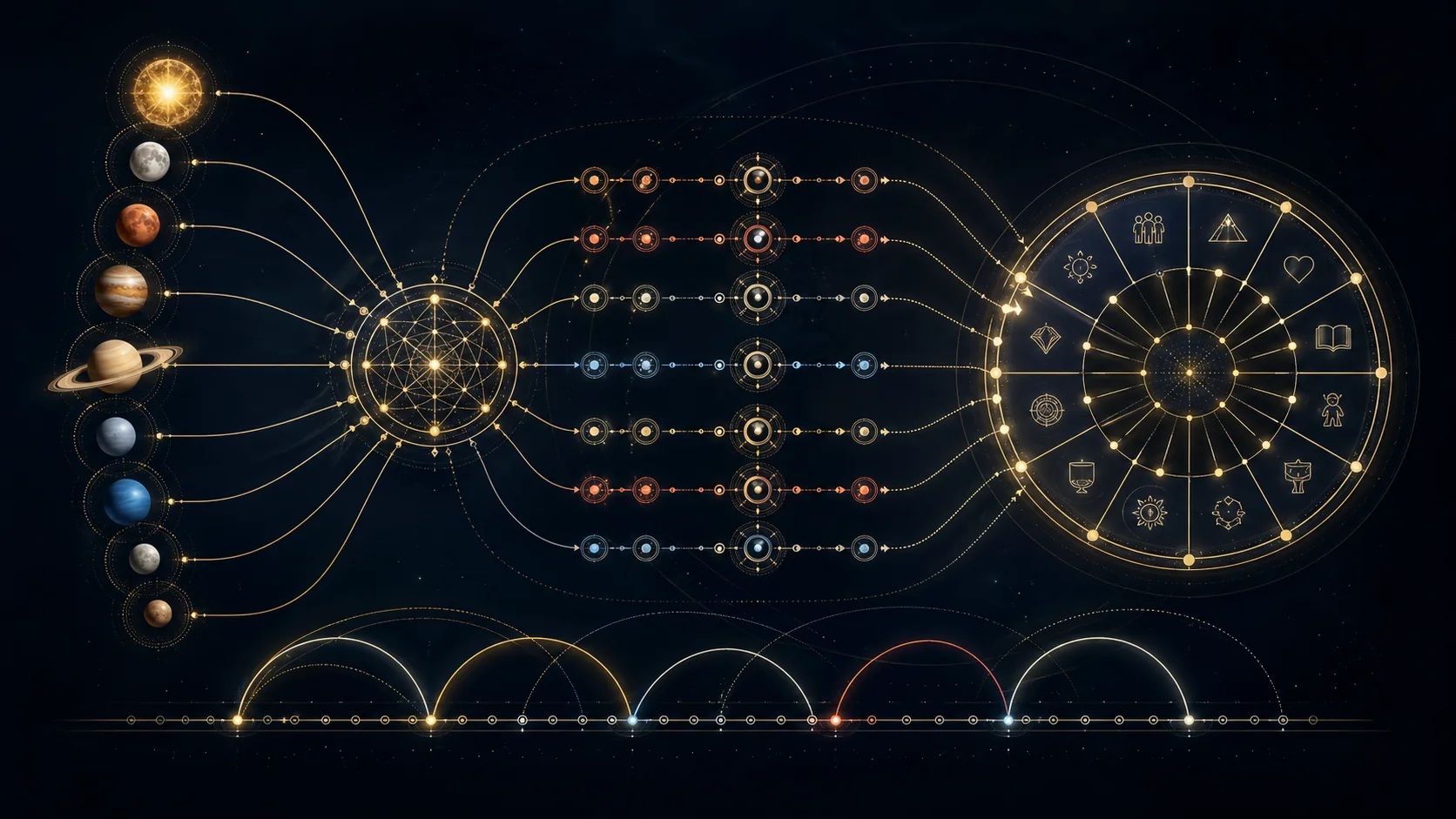
The purpose of an API in this context is practical. Astrology products often need to balance user convenience with methodical analysis. A birth time rectification API can receive chart data, event data, and rule-based inputs, then return structured results that can be displayed in a dashboard, saved for consultation, or used in an internal workflow. When done properly, this allows a platform to offer more than generic chart summaries. It creates a pathway for deeper analysis without forcing every user to manually interpret technical details.
Why Birth Time Accuracy Matters in KP Astrology
In KP astrology, the chart is not read only from the broad sign level. The finer layers matter. The star lord shows the direction of results, while the sub lord helps confirm or deny them. This means that a small time difference may lead to a different ascendant degree, which can affect house cusps and the chain of significations. In rectification work, those differences are not minor. They are often the key to deciding whether a birth time is usable or needs correction.
Imagine a user trying to understand marriage timing, career change, or relocation. If the chart is slightly off, the event indicators may appear to contradict the life story. A well-designed rectification flow can help the user and astrologer test likely birth times against known events. For instance, a career promotion that happened in one month may align better with one time than another. A move to a different city may strengthen a different chart pattern. The process is not about forcing a result; it is about comparing the chart to reality with patience and clarity.
In an astrology product, this accuracy also improves trust. Users are more likely to stay engaged when they see that the system is not just producing random predictions. A structured rectification interface shows that the product understands uncertainty and handles it responsibly. That is particularly valuable for consultation platforms, learning tools, and chart-analysis dashboards where users expect both usability and seriousness.
There is also a difference between a simple calculator and a meaningful rectification workflow. A calculator can collect inputs, but a good astrology product should guide the user through the logic. It should explain why a certain event matters, how it may affect the candidate birth time, and what the output means in practical terms. This is where KP-based methodology is especially helpful because it naturally supports a step-by-step interpretation.
How the Rectification API Fits into Astrology Products
A birth time rectification API is most useful when it is integrated into a complete astrology experience. For example, a product may allow the user to create a profile, enter the known birth time range, and record important life events such as education, marriage, job change, childbirth, relocation, or major health-related milestones. The API can then structure this information and help generate a rectification-ready result.
In a consultation setting, an astrologer might open the birth chart, review the candidate times, and compare the event sequence. The API can support this by organizing the chart data and making it easier to test variations. For an app that serves many users, this creates consistency. A user can save time by entering details once, while the backend logic handles the technical processing in a standard way.
Consider a simple example. A woman knows she was born in the morning, but her family is unsure whether it was before sunrise or shortly after. She wants to understand career patterns and marriage timing. Without rectification, the app may produce broad results that feel too general. With a rectification workflow, the app can ask about a completed degree, first job, marriage year, and relocation. Those events give the astrologer or system more anchors to test likely times. The output becomes more grounded and useful.
Another example could involve a business owner who wants to use astrology in a client-facing wellness platform. They may not need a full deep-dive consultation for every user, but they still want a structured chart experience. A birth time rectification API can be used to offer a premium feature that helps users refine their chart before receiving detailed predictions. This kind of product design can improve satisfaction because users feel their chart is being treated with care.
Developers also benefit from a clear API approach because they can separate concerns. The front end handles data collection and presentation. The API handles the rectification logic and any chart-related computation. The consultant or astrologer then reviews the result. This makes the product easier to maintain and easier to explain to users. It also helps avoid the confusion that can happen when rectification is hidden inside a black-box report.
Using Stellar and Sub-Level Significations
The heart of KP astrology lies in understanding how the stellar and sub levels work together. The star lord indicates the general nature of the result, while the sub lord clarifies whether the result will actually manifest. In birth time rectification, this distinction matters because an event may seem possible from one layer, but the sub-level may show that it is not the best fit.
For example, suppose a candidate time suggests a strong career-related pattern. At the stellar level, the chart may show professional development, but if the sub lord does not support the actual event sequence, the time may need reconsideration. Conversely, another time may look less impressive at first glance but may match the life story more precisely when the sub-level is checked. This is why KP practitioners often emphasize close comparison rather than broad assumptions.
In astrology products, this logic can be translated into understandable language. The user does not need to see a wall of technical jargon. Instead, the product can say something like: the chart supports the event at the star level, but the sub-level needs review. Or it can show that multiple events align more consistently with one time than another. That kind of explanation helps users stay engaged and learn how rectification works without feeling overwhelmed.
One useful way to imagine the process is to think of it as checking several timestamps in a video. If you know the exact scene but not the exact minute, you compare what appears on screen until the correct moment fits. Birth time rectification works similarly. The astrologer checks life events, chart divisions, and ruling planets until the time slot that best matches the lived pattern becomes clearer.
That is also why event quality matters. A major event is usually more helpful than a minor one. A marriage, childbirth, first job, major transfer, or serious shift in residence can provide stronger clues than a routine holiday or a small workplace change. The API can help by prompting users to enter the most relevant events first, so the rectification process starts with stronger anchors.
Role of Ruling Planets in Rectification
The role of ruling planets is central in KP-based timing and rectification. In practical astrology work, ruling planets help the astrologer test whether the prevailing influence supports the event under consideration. This makes them especially useful when the recorded birth time is uncertain and several possible times are being compared.
A consultation may begin with the client sharing a life event that is easy to date. Suppose a person remembers a job confirmation letter received in a certain month. The astrologer can compare that event with the likely chart timings and ruling influences. If one candidate time repeatedly fits the event pattern better than another, the case for that birth time becomes stronger. The process can be repeated with several events until a clearer picture emerges.
This is one reason the Role of Ruling Planets in BTR video is so useful for learners. It shows how theory becomes practice. Rather than treating rectification as a mysterious art, it presents it as a disciplined method that can be studied and applied. For people building astrology products, this matters because educational content and software features should support each other. A user who watches the video can better understand why the product asks for certain data and how the rectification output should be interpreted.
In a real case, a consultant might see two possible birth times separated by only ten minutes. One time aligns better with travel and job events, while the other seems better for family events. The ruling planets can help decide which direction is more consistent. The value of the API is that it can collect these comparison points in a repeatable format so that the consultant does not have to rebuild the workflow every time.
A Practical Flow for Astrology Platforms
A useful rectification product does not stop at data entry. It guides the user through a process that feels logical. The most effective flow often includes the following steps:
- Collect the approximate birth time and place.
- Ask the user for the most reliable life events.
- Allow selection of event type, year, and any supporting details.
- Generate candidate chart options or rectification guidance.
- Present the result in a way that the astrologer can review easily.
When this structure is followed, the experience becomes much more intuitive. A user who initially arrives unsure about birth time can still move forward with confidence because the product helps them organize the information. The astrologer can then focus on analysis rather than data cleanup.
For example, a student may know their birth certificate is missing, but they have a clear record of school completion, first college admission, first employment, and marriage. These are the kinds of details that can be used to narrow down the likely birth time. The API can store the inputs, present them in order, and support a more meaningful review. In a consultation, this may save time and reduce confusion because the conversation stays centered on the chart factors that matter most.
Another practical use case is a subscription-based astrology app. The app may offer basic chart readings for all users and reserve rectification for premium members. In that model, the API becomes part of the premium experience. It can justify the upgrade because the user receives a more personalized process rather than a generic automated report. This works especially well when users are trying to understand life events that do not fit a standard chart reading.
Products that support rectification also create opportunities for better support resources. A help page can explain what kind of events are useful. A tutorial can show how a small change in birth time affects the chart. A preview video can demonstrate how ruling planets are reviewed. When these pieces are connected, the user sees the system as a helpful guide rather than a complicated technical feature.
Common User Scenarios and What They Need
Different users come to birth time rectification with different levels of certainty. Some already have a documented time and want to confirm whether it is trustworthy. Others have only a family estimate. Some are astrologers looking for tools, and others are clients trying to understand why their chart feels inaccurate. A good astrology product should be ready for all of these scenarios.
One common scenario is a user with two possible birth times from family memory. They may have heard two different versions over the years. A rectification API can help the platform compare both possibilities against real events. Instead of treating the choice as random, the system gives the astrologer a clearer structure for analysis.
Another scenario involves someone who was born in a different city than the one listed on older documents. In that case, the place data may also need review. The API can remind users that accurate location matters because charts are sensitive to both time and place. Even if the birth time is close, a different location can change the interpretation enough to affect the final judgment.
A third scenario is the client who wants to verify an event already known to the family. For example, a major surgery, job transfer, or relocation may be documented and remembered well. These events can serve as strong checkpoints. The product can ask users to mark which events are exact and which are approximate, making the comparison more honest and useful.
There is also the educational user. Someone learning KP astrology may use the API along with practice charts to see how event matching works. They might compare the chart output with the birth chart and the ruling planets calculator, then watch the related course video to understand the logic. This combination of learning tools can make rectification easier to study and easier to apply in live cases.
How Consultants Can Use the API in Client Work
For consultants, the biggest advantage of a rectification API is consistency. A client may come in with a long story, but the astrologer still needs a clean method for sorting the details. The API can help turn the conversation into a structured record. That record becomes useful for review, follow-up, and future consultations.
Suppose a client says their career path has been unstable, but they clearly remember a major turning point when they changed industries. The consultant can enter that event, compare it against candidate times, and then check whether the chart supports that shift. If the event aligns better at one time than another, the consultation can move from uncertainty to a more focused discussion. The client experiences this as clarity, not complexity.
The API also supports follow-up work. In many consultations, a first meeting is used to gather data, and a second meeting is used to discuss refined results. By saving the rectification inputs and candidate outputs, the product allows the astrologer to pick up where they left off. This is especially helpful for busy practices where clients need thoughtful analysis over several sessions.
In some cases, the astrologer may decide that the birth time is still too uncertain even after review. That is a valid outcome. Good astrology products should allow for uncertainty rather than forcing false precision. The API should make it easy to say, “We need more event data,” or “This time is more likely, but not yet fully confirmed.” That kind of honesty helps build trust.
Why This Topic Matters for Product Design
Birth time rectification is not only an astrology topic; it is also a product design challenge. The user may be anxious, curious, or skeptical. They may not know the difference between an estimated time and a verified one. They may expect instant answers while the actual process requires careful comparison. A good product must handle both the emotional and technical sides of the experience.
Clear labels, short explanations, and guided input forms can make a big difference. A well-placed note can tell the user why marriage year matters, why a relocation may be more useful than a small daily habit change, and why exact time confidence is important. These details reduce friction and improve the quality of the data entering the rectification process.
Product teams can also think about how the result is presented. Instead of offering only a numeric answer, the platform can show a short explanation, a confidence note, or a summary of which events supported the result. This makes the output easier to discuss in consultation and easier for users to remember later. The more understandable the result, the more valuable the product becomes.
When users are given an experience that feels organized and respectful, they are more likely to return. That matters for educational platforms, consultation services, and paid tools alike. Rectification is one of those features where quality control directly influences credibility. If the workflow is confusing, users may doubt the broader astrology product. If the workflow is clear, they are more likely to trust the platform as a whole.
Learning More and Getting Help
For learners who want to understand the topic more deeply, the best path is to combine study, observation, and supervised practice. Watching the Role of Ruling Planets in BTR video can help clarify how the method is approached in practice. Using the Birth Time Rectification tool can help you see how the workflow is organized. Reviewing a birth chart alongside the ruling planets calculator can make the connection between theory and application easier to follow.
For people who want direct guidance, a consultation can be the fastest way to get personalized support. Every case has its own mix of family memory, event history, and chart specifics. A structured conversation allows the astrologer to ask the right questions and test the strongest clues. If you want that kind of support, you can book a consultation and work through the chart in a more focused way.
In the end, the value of a birth time rectification API is that it brings discipline, clarity, and usability to one of astrology’s most sensitive tasks. It helps products handle uncertainty better, helps consultants work more efficiently, and helps users feel that their chart is being approached with care. When built around KP principles such as stellar and sub-level analysis and supported by ruling planets, the process becomes not only useful but genuinely practical for modern astrology products.
Explore More from KP Astro Academy
Related Tools & Features
- Childbirth Selection Tool
- Birth Time Rectification Tool
- Ruling Planets Calculator
- Marriage Matchmaking Calculator
- Career & Education Finder
- Transit Search & Prediction
- Planetary Remedies Finder
- Free KP Kundli
- Daily Panchang Calculator
- Vedic Ephemeris Calculator
- Hora Chart Calculator
- Ashtak Varga Calculator
- KP Event Finder
- Personal Muhurat Finder
- Cusp Promise Calculator
- Bhav & Dasa Phal Predictions
- Dasha Promise Calculator
- KP Astrology Consultation
Further Reading
- Identifying Intercaste Marriage Combinations in KP
- Free Astrology Readings in KP Astrology (An Ethical Astrology Perspective by Navin)
- 💰 Why Billionaires Turn to Astrology: A Maslow’s Hierarchy Perspective
- Childbirth in KP Astrology: Promise, Delay, Denial, and Hope
- 🌿 Practical Remedies to Fix Any Trouble in Life: The KP Astrology Way
- Longevity and Health in KP Astrology Without Fear-Mongering
- Astrology and Meditation: Aligning Your Practice with Your KP Chart
- White Label Astrology Software For New Astrologers
- Career Business Astrology Report Api
- Should This Marriage Be Saved? KP Astrology Is Not Sentimental
- Understanding KP Hit Theory the Right Way
- Behavioral Remedies Api For Astrology Products
Loading article...