Kp Significator Api For Event Prediction

Kp Significator Api For Event Prediction
Welcome to KP Astro Academy. In this article, we look at how KP astrology uses significators to support event prediction in a practical, repeatable way. If you have ever wondered why one chart seems to show an event clearly while another looks confusing at first glance, the answer often lies in how the significators are read at the stellar and sub levels. In KP, the question is not simply whether a planet is strong or weak in a general sense. The question is: what does it signify, and does it have enough promise to deliver a result when the timing is right?
That is why the topic of kp significator api for event prediction is so important. In the KP framework, a significator acts like a pointer. It connects a planet to a house, matter, or event through its placement, star lord, sub lord, and the houses it represents. When we use this properly, we are not making vague statements. We are narrowing the field and asking a more precise question: what kind of event is indicated, and under what conditions can it occur?
Many learners first meet KP through simple examples, such as marriage, job change, or travel, and then quickly realize that the method becomes more meaningful when they study actual cases. A student may observe that two people both have a strong desire for career growth, yet only one changes jobs in the expected period. The difference is often in the significators. One chart may show the relevant houses activated clearly through the star and sub-lord chain, while the other may not. This is where KP becomes less about broad interpretation and more about disciplined analysis.
KP astrology is known for its rule-based approach to prediction, especially through the sub-lord theory and ruling planets. The sub lord is especially important because it acts as the final confirmer or denier. A planet may promise a result through its star lord connection, but the sub lord can refine that promise and determine whether the event has enough support to materialize. This is why experienced KP readers do not stop at one level. They check the full chain and look for consistency across the chart.
To make this clearer, imagine a person asking about marriage. In a traditional broad reading, one might say that Venus or the seventh house is relevant. In KP, that is only the beginning. We ask: which planet signifies the seventh house, which planet signifies the second house of family after marriage, which planet signifies the twelfth house of bed comforts or separation factors, and does the sub lord support the promise? If the relevant significators are activated and supported by the ruling planets at the time of judgment or transit, the indication becomes much more specific. If the signification is mixed or contradictory, then the prediction must be handled more carefully.
This method is useful because real life rarely follows a single obvious pattern. For example, someone may want to know whether a job offer will arrive soon. A chart may show promise through the tenth house and the eleventh house, suggesting professional progress and gain. But if the sub lord of the relevant house is connected to the sixth house of competition without clear support for outcome, the person may face delays, interviews, or repeated selection rounds before any final result. This is not a failure of prediction. It is a more realistic picture of the event process.
Why Significators Matter in Event Prediction
In KP astrology, signification is the bridge between a planet and an event. A planet does not simply mean one thing forever. Its result depends on what houses it signifies through its placements and connections. This is especially important when predicting real events, because a single planet may carry multiple meanings. For example, the same planet may signify gain, opportunity, and professional change in one context, while in another context it may also signify expenses or stress if it is linked to those houses.
The practical value of significators is that they help us reduce confusion. Suppose a person asks whether a project will move forward. Without a structured method, the astrologer may see many possibilities and feel uncertain. With KP significators, the astrologer studies which houses are being activated. If the project is related to business expansion, we may examine the relevant houses for gain, effort, fulfillment, and execution. Then we check whether the planets influencing these houses actually support the outcome. This process keeps the reading grounded.
One reason students appreciate KP is that it encourages observation over assumption. A chart can contain many impressive combinations, but the event prediction should be based on what is actually signified at the decisive level. A small example makes this easier to understand. Consider a person who is preparing for an overseas move. The chart may show travel indications, but travel alone does not guarantee migration. We also need supporting significators for settlement, long-distance relocation, and the practical conditions surrounding the move. If the chart only points to short trips, the event may happen, but not in the way the person expected.
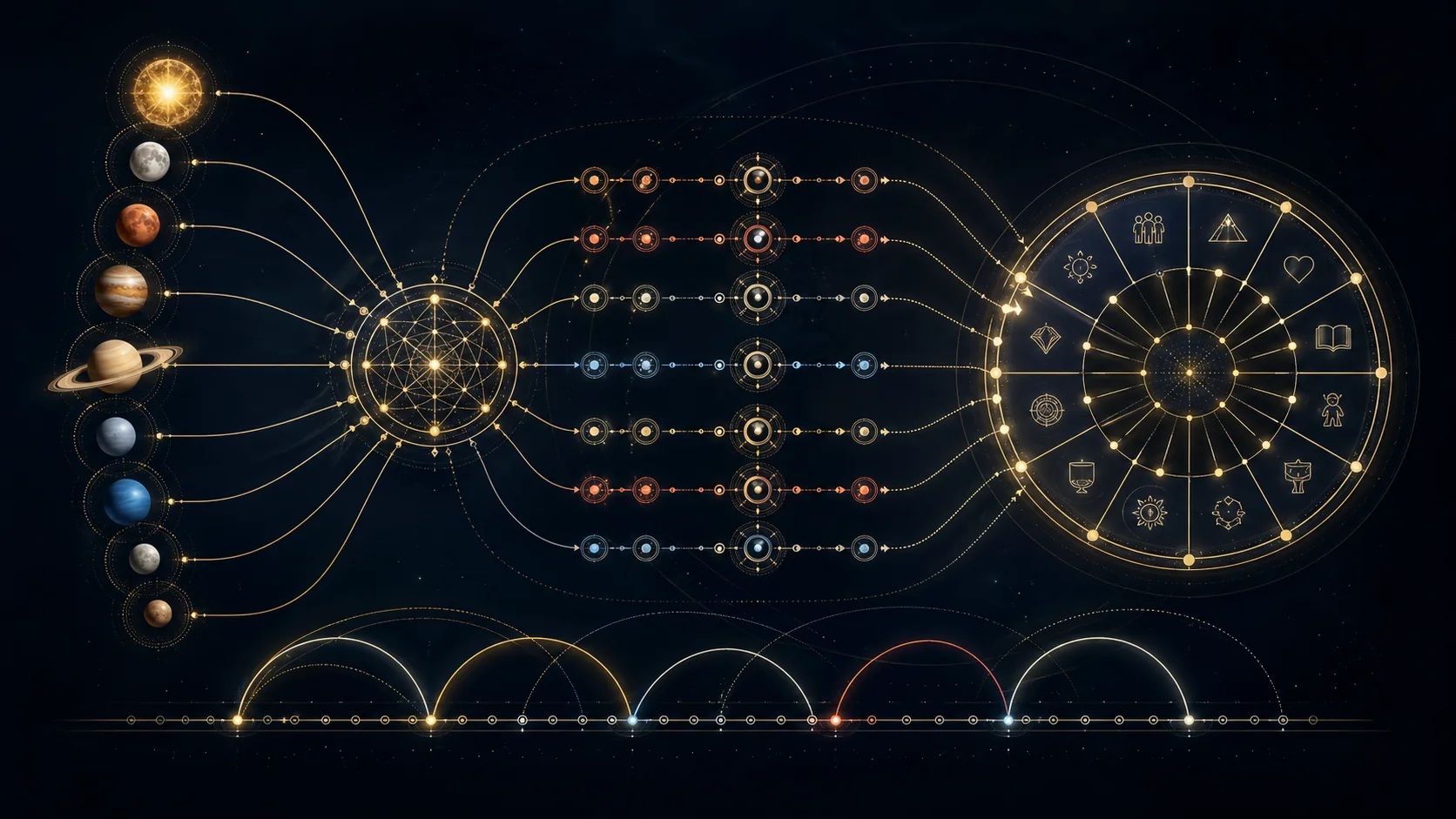
This is where the idea of api can be understood in a practical sense as a structured method of applying significators to event prediction. The method is not about memorizing random outcomes. It is about using a consistent process so that the same logic can be applied to different life questions. Whether the matter involves marriage, career, property, education, or travel, the principle remains the same: identify the significators, check the sub-lord confirmation, and then compare the result with timing factors.
Stellar Level and Sub Level: The Core of the Method
KP astrology separates the analysis into layers, and that separation is what gives the technique its precision. The stellar level shows the planet’s broad direction. The sub level confirms, denies, or modifies the result. In practice, this means a planet can point toward an event in general, but the sub lord tells us whether the event is truly supported in the final outcome.
Think of it like this: the stellar level may open the door, but the sub level decides whether you can step through it. A person may have a chart that strongly indicates an interview, and that interview may even result in positive discussion. Yet if the sub lord is not supportive, the offer may not be finalized immediately. The event may still occur in some form, but not as a completed success. That distinction matters because clients do not usually ask for abstract possibilities. They ask for outcomes.
Let us take a realistic example. A woman wants to know whether her relationship will convert into marriage. Her chart shows clear romantic involvement through relevant significators, but the marriage houses must also be activated. If the star lord supports relationship matters while the sub lord signifies only attraction without commitment, the relationship may remain at the dating stage. If, however, the sub lord also connects with family integration, formal union, and fulfillment, then the same chart becomes more supportive of marriage. The prediction becomes sharper because both levels agree.
This is also why KP readers are careful with mixed charts. A chart can show one thing at the stellar level and a different thing at the sub level. In such cases, the astrologer should not rush. A client may be emotionally invested in one possible outcome, but the chart must be read honestly. If the evidence does not support a final result, the correct approach is to say so. That is one of the strengths of KP astrology: it encourages disciplined judgment rather than overly optimistic interpretation.
How Ruling Planets Support the Judgment
Another important feature of KP is the use of ruling planets. Ruling planets help validate the judgment at the time of reading and during the event window. They act as a practical reference point for confirmation. This is especially useful when a person is asking a question at a specific moment and wants to know whether the chart is supporting the matter now.
For learners, the ruling planets can feel abstract at first, but they become easier to understand when tied to real questions. Suppose someone comes for a consultation about an upcoming exam result. The astrologer does not only inspect the natal chart. The astrologer also notes the ruling planets at the moment of judgment and checks whether they align with the relevant significators. If they do, the reading gains strength. If they do not, the astrologer may advise caution about the timing.
One practical advantage of this approach is that it helps avoid overconfident predictions. A chart may look promising in a general sense, but if the ruling planets do not support the event window, the result may be premature. This protects both the astrologer and the client from false certainty. It also creates a more responsible consultation process because the final judgment is based on multiple layers of support.
You can explore this tool with the ruling planets calculator, which is helpful for students who want to practice the method in a structured way. Many beginners find that once they start comparing their chart analysis with the ruling planets, their confidence improves. They begin to notice patterns: when the relevant houses are active and the ruling planets agree, the chart feels easier to read. When they disagree, the case demands more caution.
From Theory to Practical Prediction
It is one thing to understand a definition, and another to use it in an actual prediction. The real value of KP significators appears when we apply them to concrete questions. A student may ask, for example, how to judge whether a person will secure a promotion. The first step is to identify the houses related to career growth, recognition, and fulfillment of professional goals. The next step is to see which planets signify those houses. Then we check the sub lord to see whether it confirms advancement or points to obstacles such as delay, change, or competitive pressure.
Consider a realistic scenario. A man has been working in the same company for several years. He is shortlisted for promotion, but the decision is pending. His chart may show that the tenth house and eleventh house are activated, suggesting position and gain. However, the sixth house may also be involved through a competing significator, indicating rivalry and evaluation. If the sub lord supports final gain, he may receive the promotion. If it supports only effort without closure, he may have to wait another cycle or face a more complicated outcome such as a change in role rather than a formal promotion. The prediction becomes useful because it reflects likely form, not just wishful thinking.
Another example is property purchase. A family may ask whether they will buy a house soon. In KP, the analysis would not stop at one or two houses. We would consider the houses connected to property acquisition, financial readiness, and the ability to complete the transaction. If the planets signify the relevant houses and the sub lord supports fulfillment, the matter may proceed. If the chart shows expenses, loan pressure, or unresolved paperwork, the event may be delayed even if the desire is genuine. Again, the significators guide us to the practical reality of the situation.
This kind of example matters because astrology becomes valuable when it helps people understand the shape of an event. Clients often do not ask only “yes or no.” They ask: “Will it happen soon?” “Will it be smooth?” “Will there be delay?” “Will I need to change plans?” KP significators help answer these questions because they show the quality of the outcome, not only the possibility of one.
Understanding Confirmation and Denial
One of the most useful lessons in KP astrology is learning that not every promise matures. A planet may look important, but unless it confirms through the sub level and is supported by the broader chart context, the event may not occur as expected. This is not discouraging. It is simply more honest.
For instance, a student may want to know about foreign travel for studies. The chart may contain indications of travel and higher education, but the final result depends on whether the necessary significators work together. If the sub lord connects to study, movement, and long-distance connection, the event becomes more likely. If the sub lord instead points to interruption, local focus, or financial strain, the plan may remain at the application stage. The person may still apply, receive an interview, or explore an opportunity, but the final departure may not happen immediately.
This distinction between promise and completion is a major strength of the KP system. It helps the astrologer avoid exaggeration. It also helps the client prepare realistically. A person who learns that a job transfer may be delayed can plan finances and family logistics accordingly. Someone who hears that a relationship has strong attraction but weak commitment indicators may think carefully before making assumptions. In this way, prediction becomes practical guidance.
Confirmation and denial also matter in timing. If the chart strongly signifies a matter but the current period is not supportive, the event may not occur yet. A person can have excellent job potential, but if the timing is wrong, the opportunity may only arrive later. KP readers therefore pay attention to the interaction between significators and the event period. The chart may show the theme; the timing decides the moment.
How Students Can Practice the Method
For learners, the best way to understand KP significators is to practice with simple questions and real charts. Start with one topic at a time. Marriage, job change, and travel are useful beginning points because they have clear life outcomes and are easier to verify later. Study the chart, identify the relevant houses, and list the planets that signify them. Then compare your conclusion with the final event.
It helps to keep a small journal. Write down the question, the ruling planets, the significators you identified, and your prediction. Later, compare the outcome. This habit does two things. First, it improves accuracy through feedback. Second, it trains you to notice where your reasoning was strong and where it was weak. Over time, you stop relying on intuition alone and begin to build a disciplined method.
A student at KP Astro Academy once described how confusing chart reading felt before they started practicing this way. They could identify many planets related to an event, but they did not know which ones truly mattered. After repeatedly checking the sub lord and ruling planets against actual outcomes, their interpretation became more focused. They began to see that the chart was not giving random signals. It was showing a hierarchy of significance. Once they understood that hierarchy, even complex cases became easier to sort.
If you are studying this topic seriously, the free KP rules cheat sheet is a helpful starting point. It gives you a structured way to review essential ideas without losing track of the basics. Many learners find that having a concise reference makes it easier to revise before a consultation or a study session. You can also revisit the core ideas alongside our comparison of KP Astrology vs Vedic Astrology accuracy predictions to better understand why KP places such strong emphasis on event timing and verification.
Using a Simple Framework in Consultation
In a consultation setting, clarity matters. Clients usually come with a specific concern, and the astrologer must respond in a way that is both accurate and understandable. A useful framework is to begin with the event question, identify the relevant significators, verify them through the sub level, and then check the ruling planets for timing support. This avoids scattered explanations and keeps the reading focused.
For example, if a client asks whether they will switch careers, the astrologer can explain the matter step by step. First, determine which houses relate to the current profession, change, new opportunity, and final settlement. Then identify which planets signify those houses. If the planets suggest both movement and acceptance, the change may be likely. If they suggest only search without closure, the client may need to wait or broaden the search. This process helps the client understand not only the prediction, but the reasoning behind it.
That kind of explanation is especially valuable for people who are new to astrology. They are often familiar with broad statements, but they appreciate concrete logic. When they see that each part of the chart is being used carefully, confidence grows. They are also more likely to remember the reading because it was tied to a specific method rather than a vague impression.
For students who want a deeper demonstration of the concept, the Definition of Ruling Planets video is a useful course reference. It helps connect the theory with the practical use of ruling planets in judgment. Watching a focused explanation like this can make the method easier to apply when you sit with an actual chart.
Why This Approach Is So Useful for Real-Life Questions
The real strength of KP significators is that they help the astrologer speak to life as it is actually lived. People do not experience events as isolated symbols. They experience them as timelines, decisions, delays, confirmations, and adjustments. A marriage question may include family discussions, emotional readiness, and logistics. A career question may involve interviews, notice periods, internal politics, and timing. A travel question may be affected by funding, visa processing, or personal circumstances. Significators help organize all this complexity into a readable pattern.
When used properly, the method saves time and improves clarity. Instead of guessing, the astrologer studies the chart in a disciplined sequence. Instead of relying on one strong-looking factor, the astrologer checks whether the entire chain supports the event. Instead of making a dramatic statement too early, the astrologer waits for confirmation. This is why KP is so respected by many serious students. It provides a structured path from chart to judgment.
It is also worth noting that this approach encourages humility. Some charts will be straightforward. Others will not. A skilled reader learns to say, “The chart supports this,” or “The chart does not clearly support that yet,” rather than forcing a dramatic conclusion. That habit is valuable because it preserves trust and keeps the practice honest. In prediction work, honesty is not a weakness. It is a requirement.
As you continue studying this topic, remember that accuracy comes from repeated application. Start with the basics, observe how the significators behave in actual charts, and use the ruling planets as a checkpoint. With time, the method becomes more natural. You begin to notice that the chart is not a puzzle to be solved by guesswork. It is a pattern to be read carefully and tested against reality.
To continue learning, you can explore the free resource, use the ruling planets calculator, and review the course video on Definition of Ruling Planets. These tools support a step-by-step understanding of how KP significators work in event prediction. With practice, the logic becomes clearer, the reading becomes sharper, and the results become easier to explain in a meaningful way.
Explore More from KP Astro Academy
Related Tools & Features
- Childbirth Selection Tool
- Birth Time Rectification Tool
- Ruling Planets Calculator
- Marriage Matchmaking Calculator
- Career & Education Finder
- Transit Search & Prediction
- Planetary Remedies Finder
- Free KP Kundli
- Daily Panchang Calculator
- Vedic Ephemeris Calculator
- Hora Chart Calculator
- Ashtak Varga Calculator
- KP Event Finder
- Personal Muhurat Finder
- Cusp Promise Calculator
- Bhav & Dasa Phal Predictions
- Dasha Promise Calculator
- KP Astrology Consultation
Further Reading
- Childbirth in KP Astrology: Promise, Delay, Denial, and Hope
- Gemstone Remedy Ecommerce Integration
- Mastering the Dasha Sequence in KP Astrology
- The Golden Rule of KP Astrology Predictions
- Predicting Foreign Travel with KP Astrology
- Why Birth Time Accuracy Can Destroy or Save a KP Prediction
- KP Astrology Foundations (Part 3): How to Read a KP Script Without Guesswork
- Chatgpt Style Ai Astrology Needs Indian Knowledge Base
- Marriage Compatibility Report Api For Astrology Sites
- Understanding KP Hit Theory the Right Way
- 🧘♂️ How to Meditate: A Deep Dive for the Minds that Refuse to Sit Still
- Resolving Conflicts: When the Star Lord Promises but the Sub-Lord Denies
Loading article...