The Best Astrology API for SaaS and Mobile Apps

The Best Astrology API for SaaS and Mobile Apps
Building an astrology product sounds simple at first. A user enters a birth date, a time, and a place, and the app returns a chart, a forecast, and maybe a helpful reminder about timing. But anyone who has tried to build this for real knows that the difficult part is not the interface. The difficult part is the astronomy and chart logic behind it.
That is where many startups get stuck. The team may have a strong frontend, a solid backend, and a clear growth plan, yet chart calculations become the bottleneck. Birth time handling, time zones, Julian day conversions, ayanamsa, topocentric adjustments, house systems, cusp calculations, and planetary positions can quickly turn into a months-long engineering project. For a small SaaS team or a mobile app startup, that can slow the product down before users ever see the first release.
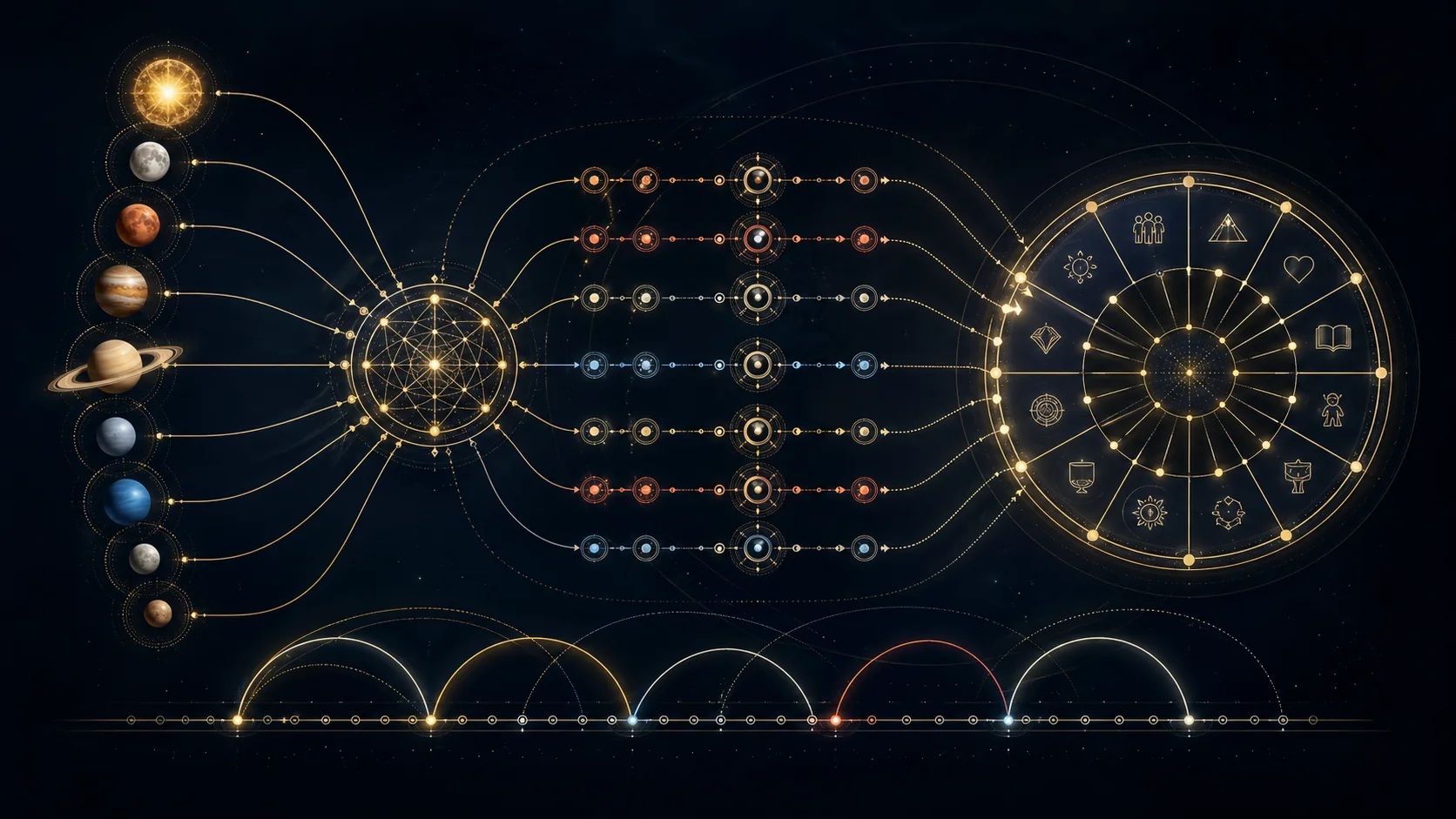
The KP Astro API is designed to remove that friction. Instead of building and maintaining complex astrology logic from scratch, developers can send a request and receive structured JSON with the data they need for chart rendering, prediction layers, and user-facing reports. That means less time debugging calculations and more time designing features, onboarding users, and improving retention.
For startups, speed matters. A founder testing an astrology app idea does not usually need a large in-house research stack. They need a dependable way to generate charts, interpret results, and ship an experience that feels accurate and responsive. The KPI is not just correctness. It is also product velocity. The right API helps a team move from idea to beta without rebuilding the math every time a new feature is added.
Why Developers Choose the KP Astro API
Astrology software development is a mix of astronomy, data handling, and product design. The challenge becomes even more noticeable when the app is expected to work on web and mobile with the same level of consistency. One user might open a chart on an Android phone in one time zone, then later view the same chart in a SaaS dashboard on desktop. If the calculations are not stable, users notice immediately.
The KP Astro API helps teams avoid that problem by abstracting the heavy computational work into a simple interface. Developers do not need to manage C-libraries directly or maintain custom calculation code for every astrological layer. They can focus on the user journey instead: sign-up, birth data collection, chart generation, reading output, and presentation.
There are several reasons startups and development teams choose this approach:
- High Performance: The API is built for millisecond latency so chart generation can happen in real time, which is especially useful when a user is waiting on a mobile screen or a live consultation dashboard.
- Swiss Ephemeris Backed: The system uses Swiss Ephemeris foundations, which are widely respected in professional astrology software environments and provide a dependable calculation base for serious applications.
- Comprehensive Data: You can receive planets, cusps, Vimshottari Dashas, and AI predictions in one call, which reduces the need to stitch together multiple services.
That combination matters because product teams usually do not want fragmented dependencies. A charting workflow that depends on one service for planetary positions, another for dashas, and another for interpretation adds complexity to deployment and maintenance. When the core astrology data arrives together, the team can keep the architecture cleaner and the user experience more seamless.
It also matters for reliability. Imagine a startup launching a premium feature in which users pay for detailed chart analysis. If the planet positions and cusp data come from one source but the dasha computation comes from another, the team has to debug discrepancies every time a customer raises a support ticket. A unified API reduces those mismatches and makes it easier to maintain trust.
Why Astrology Is Hard to Build Into Software
Many founders underestimate how many small details affect astrology output. A user may think the app only needs a birth date and location, but the logic beneath the surface is more involved. Time corrections need to be handled carefully. Coordinates must be interpreted correctly. The chart should reflect the requested system consistently. Even a tiny data issue can change the user experience enough to cause confusion.
For example, consider a startup building a compatibility app. On paper, the product seems straightforward: users enter two birth profiles, and the app generates a relationship score. But then the engineering team discovers that the times entered by users are not always exact. Some people know only an approximate birth time. Others enter local time without understanding daylight saving adjustments. Others were born in a city whose coordinates need to be mapped accurately rather than guessed.
Now the team must decide how to treat missing or uncertain data, how to explain confidence levels, and how to keep calculations consistent across devices and regions. That is a lot of product work layered on top of technical work. An API that already handles the underlying chart math saves time and lowers the risk of mistakes.
This is especially valuable for startups because the early stage is all about learning. A founder may want to test whether users prefer daily forecasts, premium readings, relationship insights, or career timing features. If the chart engine is hard to maintain, every experiment becomes expensive. An API-driven approach gives the team more room to test ideas without rebuilding the engine each time.
What the API Helps You Build
A practical astrology API should not only calculate planetary positions. It should support the kinds of features real products need. The KP Astro API is useful when you are building:
- Birth chart generators for web apps and mobile apps
- Daily or monthly forecast features
- Vimshottari Dasha timelines
- Relationship or compatibility tools
- Consultation dashboards for astrologers
- Personalized reports based on chart data
- AI-assisted interpretation layers
Think about a mobile app that sends users a daily notification with a short insight. Behind that single message may be a chart, a transit layer, a dasha calculation, and a personalized rule set. If the app has to call several disconnected systems to generate the result, response time and reliability suffer. If the data comes in one clean response, the app can render quickly and the experience feels polished.
Or imagine a SaaS platform for professional astrologers. The astrologer may need to generate a chart during a live call, explain the current dasha period, and show a clean visual to the client. The API should support fast retrieval, clear structure, and enough detail to power the reading without requiring manual computation at every step. That is exactly where a strong astrology API becomes more than a backend convenience. It becomes part of the product value.
Integration Is Simple
The integration flow is intentionally straightforward. You send a POST request with the birth date, time, and coordinates, and the API returns structured JSON containing the astrological data your product needs. That makes it possible to build a chart service without exposing the complexity to your users.
A simple request-response pattern is particularly helpful for startups because it supports a common product workflow. A user enters details in a form, the app validates the data, sends it to the API, and then displays the result in a readable interface. The engineering team does not need to invent a custom calculation service just to get the first version working.
The returned data includes the precise degrees, Nakshatra Lords, and Sub-Lords required for KP Astrology applications. For teams building around KP methods, this structure is important because the output must be easy to map into chart views, analysis screens, and reading logic.
A real-world example helps here. Suppose a startup launches a premium “career timing” feature. A user enters birth details and asks when the best window may be for a job switch. The app does not need to explain the full calculation chain to the user. It just needs to fetch the relevant chart data, identify the key periods, and present the result in a clear format. When the API response is clean and consistent, the product team can focus on the interpretation layer and the user experience.
That also helps with mobile development. Mobile interfaces have less space than desktop dashboards, so the app should not be cluttered with technical complexity. If the backend returns well-structured JSON, the frontend can stay lightweight. The user sees a smooth flow instead of a long loading screen or a confusing data dump.
Why Millisecond Latency Matters in Real Products
Speed is not just a technical metric. It affects how users feel about the product. Astrology apps often live or die by engagement. If the chart loads quickly, users are more likely to explore the reading, ask follow-up questions, and return later. If it takes too long, many users close the app and never come back.
That is why low latency is so valuable. Millisecond-level response time makes the experience feel interactive. A user can adjust a date, refresh a chart, or move from one screen to another without waiting through a noticeable delay. In a mobile setting, that responsiveness can make the difference between a product that feels polished and one that feels unfinished.
Consider a consultation platform used by astrologers during client sessions. The astrologer is on a video call, the client asks a question, and the chart needs to be displayed immediately. If the system is slow, the conversation loses momentum. If the API responds quickly, the astrologer can stay engaged and keep the session moving naturally.
For SaaS founders, this is not only about convenience. It is about retention, support load, and brand perception. Fast products are easier to trust. They also tend to produce fewer complaints from users who assume slow performance means unreliable calculations. A responsive API helps the app feel modern and professional from the first interaction.
Swiss Ephemeris and Why It Matters
When developers evaluate an astrology engine, one of the first questions is whether the calculations rest on a dependable foundation. Swiss Ephemeris is widely recognized in astrology software development for this reason. It provides a serious calculation base that professional astrologers and software teams have long relied on.
For a startup, that matters because it reduces uncertainty. Instead of trying to recreate astronomical calculations from scratch, the team can build on a known framework and move the product forward. This does not eliminate the need for good product design or thoughtful interpretation, but it gives the engineering stack a stronger base.
It also helps teams maintain confidence when they expand features. A company may begin with basic natal charts and later add dashas, transit views, or advanced interpretation tools. If the calculation layer is consistent, these new features can be layered in more predictably. The team does not have to question whether the underlying chart positions will shift unexpectedly from one feature to another.
A founder once described a common startup dilemma this way: “Our users did not complain that the app looked bad. They complained that the readings seemed inconsistent from screen to screen.” That kind of issue often comes from fragmented data sources or custom calculation code that has not been tested thoroughly. Using a stable calculation foundation helps reduce those kinds of product surprises.
Why Clean JSON Makes Product Teams Faster
Startups move faster when backend output is predictable. Clean JSON is not glamorous, but it is one of the biggest reasons developers can ship quickly. It lets the team parse the response, map the values into UI components, and automate downstream logic without manual cleanup.
For example, a chart page may need planetary degrees for a visual wheel, house cusp values for interpretation, Nakshatra and Sub-Lord fields for KP-specific views, and dasha data for the forecast timeline. If these values arrive in a consistent structure, the frontend can be built once and reused across multiple screens.
This also makes QA easier. When developers and testers know exactly where each field appears, they can verify outputs with less confusion. That reduces back-and-forth during sprint reviews and makes it simpler to spot genuine calculation issues if they ever occur.
For non-technical founders, this matters too. A founder might not care about the internals of the JSON format, but they care very much about whether their development team can build features quickly and safely. Clean data structure shortens implementation time and lowers the risk of integration mistakes.
Practical Example: A Startup Launching a Subscription App
Imagine a small team building a subscription-based astrology app. The app has three core screens: a birth chart page, a daily insight feed, and a premium consultation booking flow. The founder wants to launch an MVP in under two months.
Without an API, the engineering team would need to implement chart math, edge-case handling, and calculation updates themselves. That would likely slow the project and distract from user acquisition. With the KP Astro API, the team can focus on designing the flow, testing the onboarding, and improving content quality.
On the first screen, the user enters birth data and receives an instant chart. On the second, the app uses chart and timing data to generate a short daily reading. On the third, the app shows the astrologer the key periods and data needed for a live session. The API does the heavy lifting in the background while the product team builds the customer experience on top.
That kind of architecture is ideal for an early-stage company. It keeps the product lean, reduces infrastructure burden, and makes it possible to learn from users before overcommitting to custom backend development. If a feature is popular, the team can deepen it. If it is not, the team can move on without having sunk months into internal calculation systems.
Practical Example: A Mobile App for Daily Guidance
Now consider a mobile app focused on daily guidance. The app sends users a notification every morning with a short personalized message. The message is based on chart data, timing data, and the selected interpretation style. The team wants the app to feel warm, quick, and dependable.
This is exactly the kind of product that benefits from a fast API response. The app can fetch chart data in the background, build the reading, and display a concise insight before the user scrolls away. If the API is slow, the app risks turning a moment of curiosity into frustration. If it is fast, the user learns to trust the app as part of their morning routine.
In practice, the team may also experiment with onboarding. Some users may want full birth details, while others may begin with a partial profile and fill in more information later. A flexible API setup supports those product experiments more easily than a rigid custom stack. That makes it easier to refine the app around real user behavior rather than assumptions.
Practical Example: Consultation Tools for Astrologers
Another strong use case is software for professional astrologers. In this setting, the product is not just serving casual users. It is supporting a working practitioner who needs reliable data during a consultation. A chart delay, inconsistent output, or cluttered dashboard can interrupt the flow of a session.
With the KP Astro API, a consultation tool can retrieve chart data quickly, present it clearly, and help the astrologer answer questions in real time. If the astrologer is discussing timing, relationship themes, or career periods, the interface can display the relevant chart layers without requiring manual calculation.
That makes the software more valuable to the practitioner and more likely to be used repeatedly. A good tool does not force the astrologer to fight the interface. It quietly supports the conversation. That is the mark of a product that respects the workflow of its users.
How This Supports KP Astrology Workflows
KP Astrology applications depend on precision in chart data and sub-level detail. Users often need a clear view of the relevant positions, lords, and timing layers in order to interpret the chart effectively. A strong API supports that workflow by returning structured values that are easier to map into KP-oriented features.
This is especially useful for teams building educational products, consultation platforms, or premium analysis tools. When the data is consistent, the product can present it in a way that is useful both to beginners and to experienced users. Beginners may want a simple explanation, while advanced users may want to inspect the chart details more closely.
The linked comparison on KP Astrology vs Vedic Astrology accuracy predictions can also help readers understand why the right chart data structure matters when presenting KP-style analysis. In a software context, the main priority is not just generating a chart. It is making sure the result can support a meaningful reading experience.
Building for Growth Instead of Technical Debt
Many startup teams are tempted to begin with a quick custom implementation and “fix it later.” That often works for a few basic tasks, but astrology software has a way of making hidden complexity show up early. Once users start comparing outputs, asking for timing details, or requesting more advanced reports, technical debt can become visible very quickly.
Using an API from the beginning helps reduce that risk. The team does not need to spend engineering cycles rebuilding the same foundation every time a new feature is added. Instead, they can invest in user acquisition, onboarding quality, content strategy, and customer support.
This is especially important for SaaS businesses, where recurring revenue depends on long-term trust. If the app is dependable and easy to use, users are more likely to stay subscribed. If the data feels inconsistent or the experience is slow, churn rises. In that sense, the API is not just a backend tool. It is a retention tool.
Who This Is Best For
The KP Astro API is a strong fit for teams that need astrology data without building the entire calculation engine in-house. It is especially useful for:
- Startups testing an astrology MVP
- SaaS platforms offering astrology-based services
- Mobile apps with personalized daily guidance
- Consultation tools for professional astrologers
- Products that need fast and structured chart data
- Teams that want to scale without maintaining complex calculation code
If your product depends on dependable chart generation and you want to move quickly, an API-first approach can save a significant amount of time. It lets your team focus on the experience around the astrology rather than spending months recreating the calculation layer.
Final Thoughts
Astrology apps succeed when they feel accurate, responsive, and easy to trust. That requires more than a nice design. It requires a reliable calculation foundation, clean data delivery, and enough performance to support real user sessions.
The KP Astro API gives SaaS and mobile teams a practical way to build that foundation without getting buried in ephemeris complexity. By handling chart calculations, output structure, and fast response times, it helps developers launch faster and maintain a better user experience.
For a startup, that can be the difference between an idea that stays in planning and a product that reaches users. If you want to build a modern astrology app, consultation platform, or subscription service, the best place to start is often with a backend you can trust.
Stop wrestling with C-libraries and start building your product.
Explore More from KP Astro Academy
Related Tools & Features
- Childbirth Selection Tool
- Birth Time Rectification Tool
- Ruling Planets Calculator
- Marriage Matchmaking Calculator
- Career & Education Finder
- Transit Search & Prediction
- Planetary Remedies Finder
- Free KP Kundli
- Daily Panchang Calculator
- Vedic Ephemeris Calculator
- Hora Chart Calculator
- Ashtak Varga Calculator
- KP Event Finder
- Personal Muhurat Finder
- Cusp Promise Calculator
- Bhav & Dasa Phal Predictions
- Dasha Promise Calculator
- KP Astrology Consultation
Further Reading
- Structured Kp Api Response Format For Developers
- Free Astrology Readings in KP Astrology (An Ethical Astrology Perspective by Navin)
- Childbirth in KP Astrology: Promise, Delay, Denial, and Hope
- 🌿 Practical Remedies to Fix Any Trouble in Life: The KP Astrology Way
- Cusp Promise Api For Advanced Astrologers
- Birth Time Rectification Api For Astrology Products
- Education and Professional Success: The Role of 4th and 10th Houses in KP Astrology
- Astrology Isn’t Meant to Comfort You
- How to Practice KP Astrology Without Fooling Yourself
- Gemstone Remedy Ecommerce Integration
- Astrology Pdf Report Generator Api
- What to Expect in a Professional KP Astrology Reading
Loading article...