How to Rectify Your Birth Time Using Ruling Planets and Life Events

The BTR Process Step by Step
Birth Time Rectification in KP is a systematic, rule-based process — not guesswork. This guide walks you through the exact methodology used by professional KP astrologers to determine your precise birth time.
- Step 1: Gather your approximate birth time and location
- Step 2: Note the Ruling Planets at the moment you decide to rectify
- Step 3: Match ruling planets to the Ascendant sub-lord chain
- Step 4: Verify with 3-5 major life events and their Dasha periods
Why birth time rectification matters in KP astrology
Even a small difference in birth time can change the reading of a chart in a meaningful way. In KP astrology, the Ascendant changes quickly, and the sub-lord can shift even more subtly within a short span of time. That means a birth record that is off by just a few minutes may point to different houses, different cusp sub-lords, and different life results. For an astrologer trying to judge marriage, job changes, children, relocation, or health-related themes, those few minutes can make the difference between a chart that fits and a chart that feels vague.
This is why rectification is not treated as a casual exercise. It is a structured process that uses the chart itself, the time of inquiry, and the native’s lived experience together. In practical terms, rectification asks a simple question: Which birth time best explains the actual sequence of events in this person’s life? A good rectification does not chase dramatic predictions. It looks for consistency. It checks whether the chart behaves like the person’s life has behaved.
Think of it like tuning a musical instrument. If the strings are slightly out of tune, the song still exists, but it will not sound right. Rectification is the process of bringing the chart into tune so the notes of life events line up with the astrological structure more clearly. Once that happens, the chart becomes more useful for timing and interpretation.
It also helps to approach rectification with patience. Many people expect one event to “prove” the exact birth time. In reality, reliable rectification usually comes from pattern recognition across several events. One event may support a range of times. Three to five events, observed together, often reduce the possibilities much more effectively. That is why the process below emphasizes both ruling planets and event verification.
Step 1: Gather initial data carefully
The rectification process begins before any calculations. The quality of the result depends on the quality of the data you bring into the process. At a minimum, you need the recorded birth time, even if it is approximate. You also need the exact birth location, because city, state, and country can affect the chart calculation. And you need significant life events with exact dates, not just approximate years.
Good event collection is often the difference between a weak rectification and a strong one. Many people remember broad milestones but not the exact date. That is understandable, but for KP work, precision matters. If possible, gather dates from documents, messages, diaries, calendars, photographs, or family records. The more exact the date, the easier it is to compare the event with the Dasha periods and the chart structure.
Useful events usually include major transitions that leave a clear mark on life. Examples often include marriage, engagement, separation, starting a first job, promotion, business launch, birth of a child, admission to a major course, move to another city or country, accident, surgery, a serious illness, property purchase, or a major loss. The event should be significant enough that it would have altered daily life or personal direction. Small events can still matter, but they are usually harder to interpret because they may not produce a strong enough signature.
When collecting events, write them in a simple format:
- Event name
- Exact date
- Place, if relevant
- Brief note about what changed afterward
For example, instead of writing “got married around 2016,” write “married on 14 February 2016 in Chennai.” Instead of “changed jobs in 2020,” write “joined first full-time role on 3 August 2020.” These details may feel ordinary, but in rectification work they are valuable because they let the astrologer compare the event against specific periods more confidently.
It is also helpful to include a few events that did not happen. For instance, if a chart indicates a strong marriage signature but the person remained unmarried by a certain age, that is just as informative as a marriage date. Likewise, if a likely career period did not bring the expected job change, that can help rule out a proposed time. In rectification, absence of an event can be a clue, not just its presence.
Sometimes people worry that they need a long biography to begin. They do not. A focused timeline of 3 to 5 major events is often enough to start narrowing the time window. More events can help, but only if they are reliable and clearly dated. A handful of accurate events is usually better than a long list of uncertain memories.
Step 2: Understand the role of ruling planets
Ruling planets are central to the KP rectification process. When you sit down to rectify a birth time, you note the planetary influences active at that moment. Traditionally, this includes the Lagna Lord, Star Lord, Rashi Lord, and Day Lord. These are the planets considered significant in the ruling set at the time of inquiry. The idea is that the moment a sincere question is asked carries its own meaningful confirmation.
In practical use, ruling planets act like a filter. They do not replace the chart or the life events, but they help you identify which proposed time is worth testing more carefully. When a proposed birth time has strong links to the ruling planets, the chart becomes more convincing. When the links are weak, the time may need to be adjusted.
A simple way to think about this is that the ruling planets are the current “signposts” while you are searching for the right chart. They help orient the rectification process. If several proposed times are possible, the ruling planets can show which direction feels supported at the moment of inquiry. This makes the process less random and more focused.
Let us say someone remembers being born around 7:10 a.m. but is not sure whether it was before or after sunrise, or whether it was a few minutes earlier or later. A rectifier might test a small range of times around that estimate. The ruling planets at the time of rectification can help identify which time in that range deserves attention. The goal is not to force a time to fit. The goal is to find the time that naturally connects with the active ruling planets and later with the life events.
Ruling planets are especially useful because they add an independent layer of confirmation. A chart based only on memory and events can still be uncertain if the time window is wide. But when the rectification moment itself points to planets that are already connected to the proposed chart, the confidence improves. That is one reason many practitioners use ruling planets early in the process rather than at the end.
The process becomes even more practical when you use a tool to record the ruling planets accurately. The Ruling Planets calculator can help capture the active set at the moment you begin rectification. This is useful because the exact moment matters. A delay of even a few minutes may sometimes shift the chart, so capturing the ruling planets promptly is important.
A useful habit is to document the date, time, and place when the rectification begins. That way, you know exactly which ruling planets were active at the moment of inquiry rather than relying on memory later.
Step 3: Match ruling planets to the Ascendant sub-lord chain
Once the ruling planets are noted, the next step is to compare them with the proposed birth chart. In KP work, the Ascendant sub-lord and its chain carry special importance. The Ascendant defines the starting point of the chart, while the sub-lord refines that point with greater specificity. A proposed time becomes more credible when the Ascendant sub-lord chain resonates with the ruling planets at the time of rectification.
This is where the process becomes more technical, but it is still manageable when approached step by step. The main question is whether the proposed Ascendant and its sub-level connections are consistent with the ruling planets. If the same planets appear repeatedly in meaningful positions, the time starts to look stronger. If there is little or no connection, the time deserves further testing.
The idea of Cusp Linkage helps organize this check. You can use the Cusp Sub Lord calculator to examine whether the Ascendant cusp aligns with the star or sub connections tied to the ruling planets. When the linkage is strong, especially when several of the ruling components point to the same planet or connected chain, the proposed time gains credibility.
Imagine you have two possible birth times that are only a few minutes apart. Both times may produce a similar Ascendant sign, but the sub-lord details differ. One time might create a cusp chain that links cleanly with the ruling planets, while the other does not. That kind of distinction is exactly why KP rectification is so useful. It reaches beyond broad sign-level interpretation and tests the finer structure.
In practice, astrologers often look for repeated agreement. If the Lagna-related chain points to one planet, and the star or sub-lord sequence also reflects the ruling set, that supports the chart. If the relation appears in multiple places, the case becomes stronger. This is what many practitioners mean when they talk about a “matching” of the ruling planets to the chart. It is not just one coincidence. It is a cluster of confirmations.
Here, patience matters again. A chart may partially match and still not be final. The astrologer may test another nearby time and compare. This back-and-forth is normal. Rectification is often a narrowing process rather than a one-shot conclusion. The proposed time is adjusted until the linkage becomes more coherent with the ruling planets and later with events.
For people who are new to KP, it can help to think of the Ascendant sub-lord chain as the chart’s identity fingerprint. Two people may share the same birth date and even the same general birth period, but small time changes can alter the fingerprint. Ruling planets are then used as a current reference point to see which fingerprint is active and plausible. Once the fingerprint and the ruling reference agree, the proposed time becomes much more trustworthy.
Step 4: Verify the proposed time through life events
After the initial chart comparison, the most important test is life-event verification. A rectified birth time should not only connect well with the ruling planets. It should also explain the person’s actual life events. This is where the process becomes grounded in reality. The chart must behave like the life story.
The key question is straightforward: when the event occurred, did the Dasha-Bhukti lord connect to the relevant houses? If the event is marriage, the relevant house connection is different from the one for job, foreign travel, or childbirth. The comparison is done event by event, looking for repeated structural agreement.
For marriage, the common house connection is 2-7-11. For job or career entry, the common house connection is 2-6-10. These combinations help indicate the type of event. A marriage event should not be forced into a career pattern, and a job event should not be interpreted as a relationship signature. Clear categorization protects the rectification from becoming vague.
Here is where exact dates matter again. If the native married on a specific date, the astrologer checks which Dasha and Bhukti were running then and whether those periods are connected to the relevant houses. The same is done for job change, childbirth, relocation, or another major event. A single event may be suggestive, but several aligned events create a much stronger case.
Suppose a native was married in 2012, had a child in 2015, and changed jobs in 2018. If the proposed birth time shows a coherent pattern where the relevant Dasha-Bhukti combinations repeatedly link to the proper house sets for each event, the time begins to look convincing. If another candidate time fails to match two or three of those events, it is likely less accurate. This multi-event comparison is one of the most practical ways to reduce error.
It is also useful to examine the quality of the event. A marriage is not just a date on paper. Was it a sudden marriage after a long delay? Was it arranged? Was there a major family resistance? Was there a relocation after marriage? These details may not replace the house connection, but they help the astrologer understand the event’s texture. Life events are lived experiences, not just labels, and the nuance can assist interpretation.
Likewise, a job event can be different from one person to another. One person may join their first role after a long period of study. Another may switch companies because of a major promotion. Another may become self-employed. Each of these may reflect different combinations or additional influences. That is why the event description should be clear and honest rather than overly simplified.
When checking events, do not look only for dramatic outcomes. Look for turning points that changed responsibilities, direction, or status. Those are often the events that speak most clearly in rectification.
How to read the sequence of confirmation
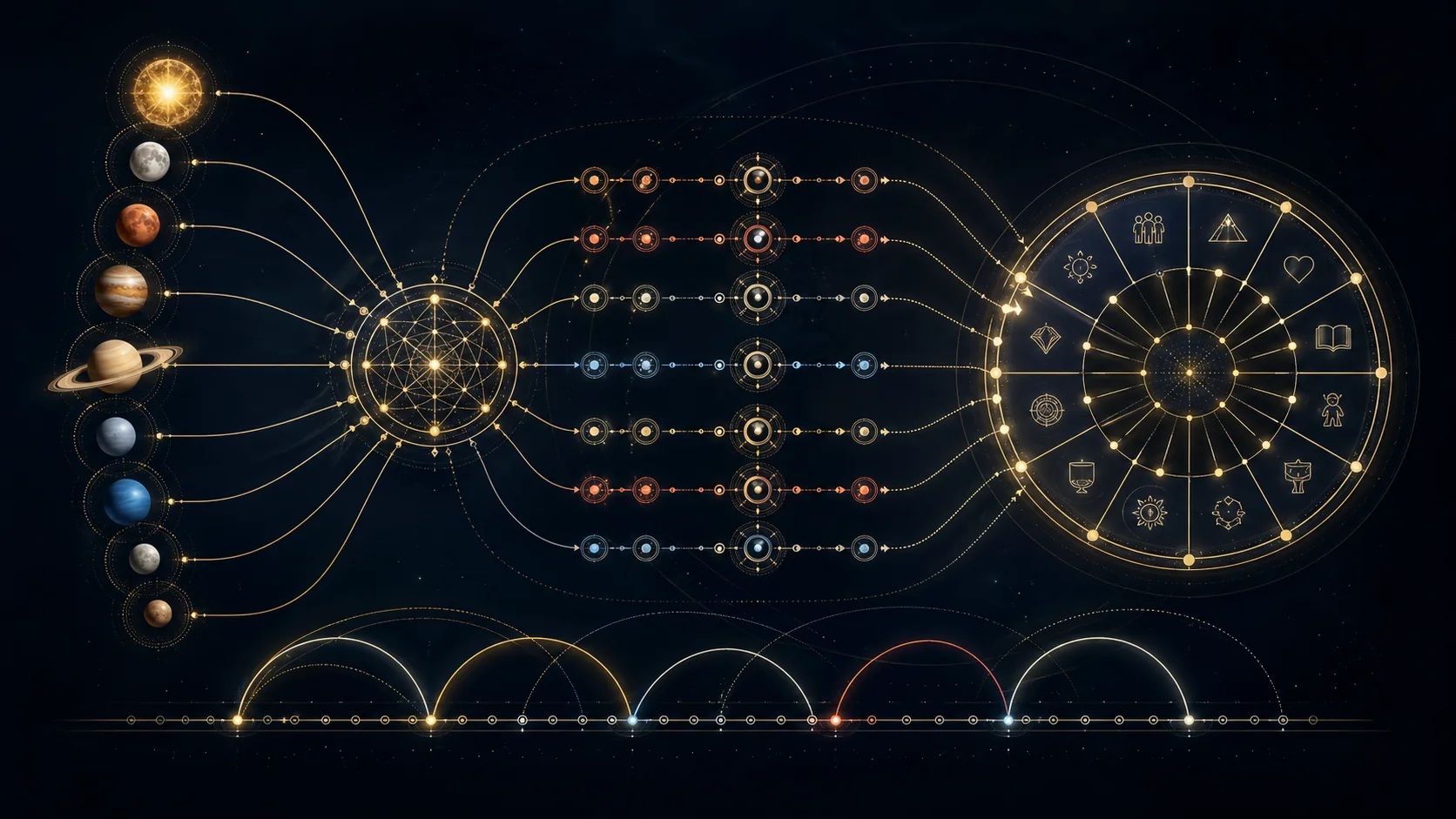
In a strong rectification, confirmation usually comes in layers. First, the ruling planets support a narrow range of time. Next, the Ascendant sub-lord chain looks consistent with that range. Then, major life events begin to line up with the Dasha-Bhukti structure. When all three layers point in the same direction, the proposed time becomes more dependable.
This layered method is useful because it prevents overconfidence. If you rely only on one factor, you can easily be misled. A time that looks good from one angle may fail under event testing. A time that matches one event may not match the rest. But when the time survives multiple checks, confidence improves naturally.
In many rectification cases, the process goes through several iterations. An astrologer may start with a broad window based on memory. Then the ruling planets reduce the options. Then the cusp analysis narrows it further. Finally, the life events determine whether the time can stand. This is normal and desirable. It means the chart is being tested from multiple angles instead of being assumed correct from the start.
There is also an important psychological benefit to this method. Many people come to rectification because they want certainty. Yet uncertainty is often part of the honest starting point. By using a repeatable process, the astrologer and the native can move from uncertainty to a reasoned conclusion. That shift itself can be reassuring, because the result is not based on vague intuition alone.
For those building astrology products or client tools, this structure is especially valuable. Users generally appreciate a process that feels transparent and testable. The Birth Time rectification framework can be integrated into workflows that need a consistent method, while still allowing human judgment for the final interpretation.
Examples of how the method works in practice
Consider a native whose family record says 6:40 a.m., but the person is unsure whether the time may actually have been closer to 6:30 or 6:50. The native shares four major events: marriage in 2014, first job in 2016, the birth of a child in 2019, and foreign travel in 2022. The astrologer first notes the ruling planets when rectification begins. Then several nearby birth times are tested.
One candidate time may show a promising Ascendant sign but a weak cusp connection. Another may fit the ruling planets well but fail to support marriage and job timing. A third may show strong linkage to the ruling planets and also produce the right Dasha-Bhukti connections for marriage and first job. In that situation, the third candidate rises to the top. If the child’s birth and foreign travel also align, confidence becomes even stronger.
Now consider a different case. A person believes they were born around noon, but the hospital record is unclear. Their life events include a delayed marriage, a sudden job loss, and a later relocation for work. At first, these events may appear unrelated. But if a proposed time repeatedly connects these events through the relevant house patterns, the chart can start to make sense. The key is not whether the events are dramatic in themselves, but whether they fit the same structural language.
There are also cases where the process reveals that the family memory is slightly off. For example, someone may have been told they were born shortly before sunrise, but event testing and cusp linkage indicate a time a few minutes later. This is not unusual. Hospitals, family recollection, and written records may disagree. Rectification helps identify which version of the story is most consistent with the actual life pattern.
Sometimes a native brings only two or three events and asks for a very exact second-by-second answer. That level of precision is usually premature. More often, the method first identifies a short window, then verifies that window against more events. In other words, the result is often a refined range rather than an absolute claim. That is a more honest and practical way to work, especially when the original record is uncertain.
Common mistakes to avoid
One common mistake is using vague life events. “Something happened in 2017” is not enough if the goal is to compare the event with Dasha periods. Another mistake is mixing up event types. A marriage signature should not be judged against the wrong house pattern. Yet another mistake is changing the birth time too aggressively just to fit one event. That can create a false sense of success while weakening the chart overall.
Another issue is confirmation bias. Once a person has an emotional preference for a time, they may only notice the events that support it. Rectification works better when you are willing to let the data contradict your assumption. A proposed time should survive testing. If it does not, it should be adjusted without forcing the result.
It is also important not to overload the process with too many minor events. A small number of major, well-documented life moments is usually more useful than a long list of weak examples. The strongest evidence tends to come from events that clearly changed life structure: relationship status, employment status, residence, family composition, or similar milestones.
Finally, do not ignore the birth location. Even if the date and approximate time are correct, an inaccurate location can distort the chart. The city, state, and country matter because the chart calculation depends on local time and coordinates. Rectification becomes much more reliable when the location is verified first.
Using tools to support the process
Modern tools can make rectification easier to manage, especially when comparing multiple candidate times. The BTR Calculator is useful for automating the early stages of the process, especially Steps 2 and 3. It helps narrow the window by organizing the ruling planets and the chart linkage in one place.
The Ruling Planets calculator helps you capture the active planetary set at the moment you begin. This is valuable because the moment of inquiry is part of the process itself. The Cusp Sub Lord calculator helps evaluate the cusp relationship and supports the analysis of whether the proposed time has a meaningful link to the ruling planets.
These tools are especially useful when you are handling several possible times or building a repeated workflow. They can save time, reduce manual errors, and provide a clearer structure for comparison. Still, tools should be seen as aids rather than replacements for judgment. The final rectification depends on how well the chart aligns with the ruling planets and the event sequence.
If you are developing a client-facing astrology product, structured rectification also improves consistency in user experience. A guided intake for approximate timing, followed by ruling planet capture and event comparison, helps create a clear pathway from uncertainty to a practical result. That is why many workflows begin with the same foundational questions before moving to deeper analysis.
For more context on starting with uncertain timing, you may also find the guide on approximate birth time intake helpful. It explains how to collect useful starting data before rectification begins, which can make the later steps far more efficient.
When to seek a consultation
Some people can use the framework to organize their own data, but a detailed final judgment often benefits from experience. This is especially true when the birth time window is wide, the life events are complex, or the chart has multiple competing possibilities. In those cases, a consultation can help interpret subtle linkages and event patterns more carefully.
If you need a thorough review of your candidate times and major events, consult with I Navin. A direct consultation is useful when you want the proposed time tested against multiple events and examined in a way that accounts for practical nuances. This is particularly valuable when your records are incomplete or when family memories differ from documents.
Consultation can also help if you are preparing the data but are unsure how to present it. For example, you may know the dates of marriage, employment, childbirth, and relocation, but not know which ones carry the strongest rectification value. A structured discussion can help rank events by relevance and determine which ones deserve the most weight.
Even when you use calculators and structured methods, an experienced review can catch details that would otherwise be missed. Sometimes the strongest clue is not the most obvious event, but the one that subtly changes the life narrative. That is why rectification often benefits from both systematic checking and human interpretation.
A practical summary of the KP rectification method
The rectification process becomes much easier when you keep its logic simple. First, begin with the best available birth time and location. Second, note the ruling planets when the rectification begins. Third, test the proposed time against the Ascendant sub-lord chain and the cusp linkage. Fourth, verify the proposed time through several major life events and their Dasha periods. If the same time keeps surviving these tests, it becomes increasingly credible.
What makes this approach powerful is its consistency. It does not depend on a random hunch or a single dramatic story. It asks the chart to demonstrate itself through repeated alignment. That is a disciplined way to work, and it is one of the reasons KP astrology is often appreciated by people who want structure in their interpretation.
At the same time, it is important to respect the limits of the method. Rectification is a refinement process, not a magic trick. It works best when you have credible data, multiple events, and a willingness to compare possibilities honestly. The more precise the inputs, the more useful the result is likely to be.
If you are ready to begin, use the available tools to collect your starting point, note the ruling planets, and compare the chart with your major life events. For workflow support, start with the BTR Calculator, review the Ruling Planets, and verify the Cusp Sub Lord connections. If you want a deeper interpretation, consult with I Navin.
In the end, the goal is not simply to produce a number. The goal is to find a birth time that explains life with greater clarity. When the ruling planets, cusp linkage, and real events all speak the same language, the chart becomes much more meaningful to work with.
Explore More from KP Astro Academy
Related Tools & Features
- Childbirth Selection Tool
- Birth Time Rectification Tool
- Ruling Planets Calculator
- Marriage Matchmaking Calculator
- Career & Education Finder
- Transit Search & Prediction
- Planetary Remedies Finder
- Free KP Kundli
- Daily Panchang Calculator
- Vedic Ephemeris Calculator
- Hora Chart Calculator
- Ashtak Varga Calculator
- KP Event Finder
- Personal Muhurat Finder
- Cusp Promise Calculator
- Bhav & Dasa Phal Predictions
- Dasha Promise Calculator
- KP Astrology Consultation
Further Reading
- Childbirth in KP Astrology: Promise, Delay, Denial, and Hope
- Gemstone Remedy Ecommerce Integration
- Stop Asking “If” and “When?”
- Astrologer Knowledge Base For Ai Astrology Products
- The Science of KP Sub Lords in Baby Birth Time Selection: Longevity, Career, and Health
- Astrological Remedies: Scientific Principles Behind Mantra and Yantra
- Health and Disease in KP Astrology
- 🌕 The Navagraha Temples of Kumbakonam
- Why Does a Retrograde Star Lord Delay a Guru Bhukti Result in KP?
- Astrology and Meditation: Aligning Your Practice with Your KP Chart
- White Label Astrology Software For New Astrologers
- Approximate Birth Time Intake For Astrology Apps
Loading article...